
Longhorn cattle are the lean, long-horned breed that became a symbol of Texas, but the name also gets tangled up with steakhouses, ranch listings and horn-span records. This guide sorts out what the breed actually is, where it came from and how to recognize one. You will also find the traits that make a Texas Longhorn stand out in any pasture.
What Are Longhorn Cattle?
Longhorn cattle are a hardy American breed best known for their enormous, curving horns. The Texas Longhorn is the best-known type, and you can spot one from across a pasture.
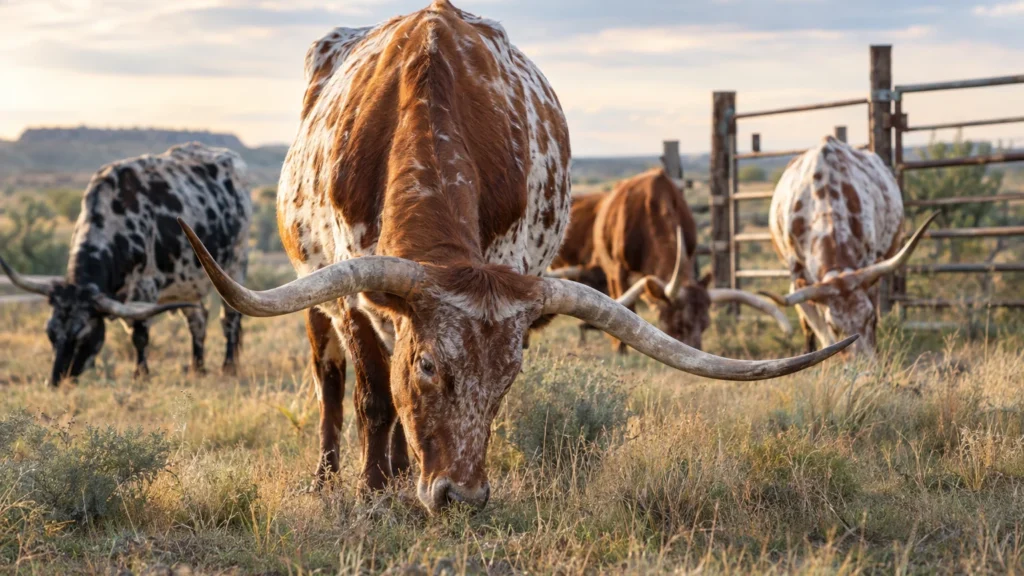
The horns are the headline, but the coat steals the second look. A Texas Longhorn can be solid red, white, black, dun, or nearly any speckled mix. No two animals look quite alike.
People still love the breed for good reasons:
- Toughness: these cattle handle heat, rough grazing, and limited feed well.
- Easy calving: a longhorn cow is known for calving with few problems.
- Heritage: the breed carries a strong link to Texas and the open range.
- Lean beef: the meat is often described as lower in fat than many common breeds.
History and Origins of the Longhorn
The Texas Longhorn descends from Spanish Criollo cattle, which Spanish colonists brought to the Americas starting in the 1490s and later into Mexico.
Herds that escaped or were turned loose ran wild across South Texas. Natural selection favored tough, disease-resistant animals that could live on scrub and little water. Here is how the story unfolded:
- Frontier years: Wild herds fed settlers and ranchers across Texas.
- Trail drives: After the Civil War, cowboys moved millions of cattle north along routes such as the Chisholm Trail, and many were of this type.
- Decline: Fenced ranges and heavier British breeds pushed longhorn cattle toward the edge of extinction by the early 1900s.
- Rescue: Ranchers and government herd keepers saved small remnant herds, and breed groups such as the Texas Longhorn Breeders Association of America and the International Texas Longhorn Association now keep registries.
Longhorn Characteristics and Appearance
The horns define the breed. A mature Texas Longhorn typically carries a tip-to-tip horn span of about 4 to 6 feet, and exceptional animals can grow wider. Span varies by age, sex, genetics and nutrition, so treat any specific number as a rough guide.
Registries such as the Texas Longhorn Breeders Association of America and the International Texas Longhorn Association measure horns in their own ways. Check their current rules if you want exact figures.
Beyond the horns, longhorn cattle show a wide range of coat colors, from solid red and white to speckled, spotted and brindle. They are lean, long-legged and hardy, and they tend to thrive on rough forage. Cows often calve easily and stay productive for many years.
That lean build also shapes longhorn beef, which is known as a leaner red meat.
Key Takeaways
- Breed identity: The Texas Longhorn is a hardy American beef breed, known for very long horns and a coat that comes in nearly every color and pattern.
- Origins: The breed descends from Spanish Criollo cattle and adapted to the harsh range of Texas over centuries. It later became tied to the Chisholm Trail drives.
- Horn span: Horn span is the breed’s signature trait, and breeders measure and track it. It also affects fencing, gates, and handling.
- Hardiness: Longhorns do well on rough forage and in hot, dry country. They are known for easy calving and a long productive life.
- Beef: The meat is typically lean. Cook it with care so it stays tender.
- Buying: Registries such as the Texas Longhorn Breeders Association of America and the International Texas Longhorn Association help you find breeders and verify pedigrees.
Frequently Asked Questions About longhorn cattle
What is longhorn?
Longhorn usually means the Texas Longhorn, a hardy American beef breed with very long, sweeping horns and a coat in almost any color pattern. It descends from Spanish Criollo cattle and adapted to the Texas range over centuries. The word also appears in restaurant brands, so check the context before you search.
How does longhorn work?
As a breed, Longhorns thrive on rough forage and in hot, dry range with little help from owners. They are known for easy calving and a long productive life, and they turn grass into lean beef. Registries such as the Texas Longhorn Breeders Association of America and the International Texas Longhorn Association track pedigrees and horn measurements.
Is longhorn worth it?
It depends on your goals. Longhorns suit owners who want a low-maintenance herd, lean grass-fed beef, or a striking pasture animal. They are generally smaller than mainstream beef breeds and yield less meat per animal, so large commercial feeders may prefer other breeds. Weigh your land, budget, and local market before buying.
What should I know before trying longhorn?
Plan for the horns first. Wide horn span calls for sturdy fences, wider gates, and careful handling in chutes and trailers. Check local zoning and fencing rules, and line up a vet who knows cattle. Visit a breeder, meet the animals, and ask about temperament, health records, and registration before you commit.
Where can I find longhorn?
For live animals, start with breeder directories and sale listings from the two main registries, then check local auctions and ranches. For beef, look to regional ranches, farmers markets, and direct-sale producers. Prices and availability vary by location and season, so confirm details with the seller before you travel or pay.
What are common mistakes with longhorn?
Common mistakes include buying on horn length alone, skipping health and registration checks, and using fences or trailers too small for wide horns. New owners also overfeed, treating the breed like feedlot cattle. Cooks sometimes expect fatty, grain-finished steak. Longhorn beef is typically leaner, so adjust your cooking to match.
References & Further Reading
- Texas Longhorn Breeders Association of America – TLBAA
- International Texas Longhorn Association – ITLA
- Texas State Historical Association – TSHA
- U.S. Department of Agriculture – USDA
About This Article
This guide was written with AI assistance from publicly available information. Prices, nutrition values and availability can change, so confirm important details with the official source before you decide.