A Creamy Copycat Recipe You Can Make at Home
There’s a reason so many guests order the mashed potatoes as their default side at LongHorn Steakhouse: they’re rich, buttery, loaded with garlic, and somehow manage to be both smooth and rustic at the same time.
If you’ve ever wished you could recreate that same comfort-food side dish without leaving your kitchen, this guide walks through a reliable homemade version of LongHorn mashed potatoes, along with the techniques that make the biggest difference in texture and flavor.
Beyond the recipe itself, we’ll cover ingredient substitutions, common mistakes that lead to gluey or bland results, nutrition information, popular variations like loaded and garlic-forward versions, and what to serve alongside them for a full steakhouse-style meal at home.
“They are smooth and creamy yet have delightful chunks throughout it. They are full of butter and garlic.”
What Makes LongHorn Mashed Potatoes Different
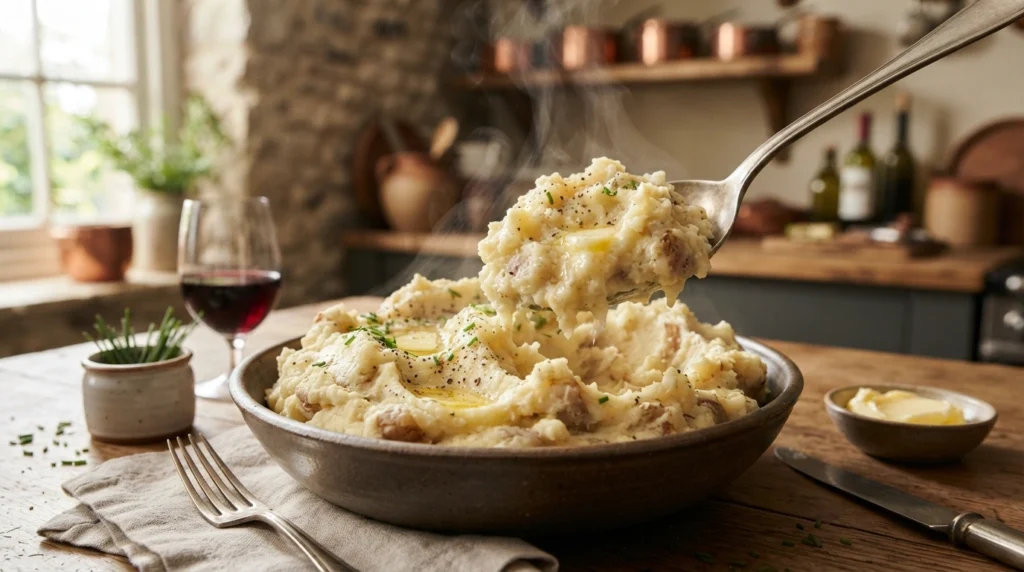
Plenty of restaurants serve mashed potatoes, but longhorn mashed potatoes version has a distinct identity: a partially rustic texture with visible potato chunks folded back in, a noticeably buttery and garlicky flavor profile, and a richness that comes from a combination of heavy cream, sour cream, and real butter rather than milk alone.
That combination is what gives homemade LongHorn mashed potatoes their signature mouthfeel creamy enough to feel indulgent, but not so smooth that they lose all texture.
Getting close to that same result at home comes down to a few key choices: the right potato variety, the right ratio of dairy to potato, and not over-mashing to the point of turning the dish gluey. longhorn mashed potatoes
Home cooks who’ve tried multiple copycat versions often note that the biggest gap between an average attempt and a genuinely close match comes down to two things: using enough fat relative to the potato volume, and resisting the urge to blend everything into total smoothness, since that rustic, slightly chunky bite is really what sets the dish apart from a standard mashed potato recipe.
Ingredients for Homemade LongHorn Mashed Potatoes
What You’ll Need
- 3 pounds russet potatoes, peeled and cut into even chunks
- 1 cup heavy cream
- ⅓ cup sour cream
- ½ cup salted butter, softened, plus extra for serving
- 1 tablespoon minced garlic
- Salt and black pepper, to taste
Russet potatoes are the preferred choice here because of their high starch content, which breaks down easily into a smooth, fluffy base.
Yukon Gold potatoes are a solid substitute if you prefer a slightly creamier, more buttery texture straight out of the pot, while waxy varieties like red potatoes are best avoided, since their lower starch content tends to produce a denser, gummier result.
Ingredient Substitution Notes
- Heavy cream can be swapped for half-and-half for a slightly lighter result, though the texture will be less rich
- Sour cream adds tang and helps balance the richness of the butter and cream; Greek yogurt is a reasonable substitute in a pinch
- Garlic can be adjusted up or down depending on how bold you want the flavor, and roasted garlic makes a milder, sweeter alternative to fresh minced garlic
Step-by-Step: How to Make LongHorn Mashed Potatoes
- Peel and cook the potatoes. Boil the potato chunks in salted water until fork-tender, generally 15 to 20 minutes depending on chunk size.
- Drain thoroughly. Excess water left in the pot will thin out the final texture, so let the potatoes sit in the strainer for a minute or two after draining.
- Set aside a portion of the potatoes. Reserve a small amount to mash coarsely by hand later, which is what creates the signature rustic texture with visible chunks.
- Prepare the butter-garlic base. Combine the softened butter and minced garlic in a small bowl while the potatoes finish cooking.
- Combine and mix. Add the butter-garlic mixture, heavy cream, and sour cream to the bulk of the cooked potatoes, then mix with a hand mixer until smooth and creamy.
- Fold in the reserved potatoes. Add back the coarsely mashed portion you set aside earlier, folding gently rather than mixing vigorously, to preserve the chunky texture.
- Season to taste. Add salt and black pepper gradually, tasting as you go, and finish with an extra pat of butter on top before serving.
Tips for Getting the Texture Right
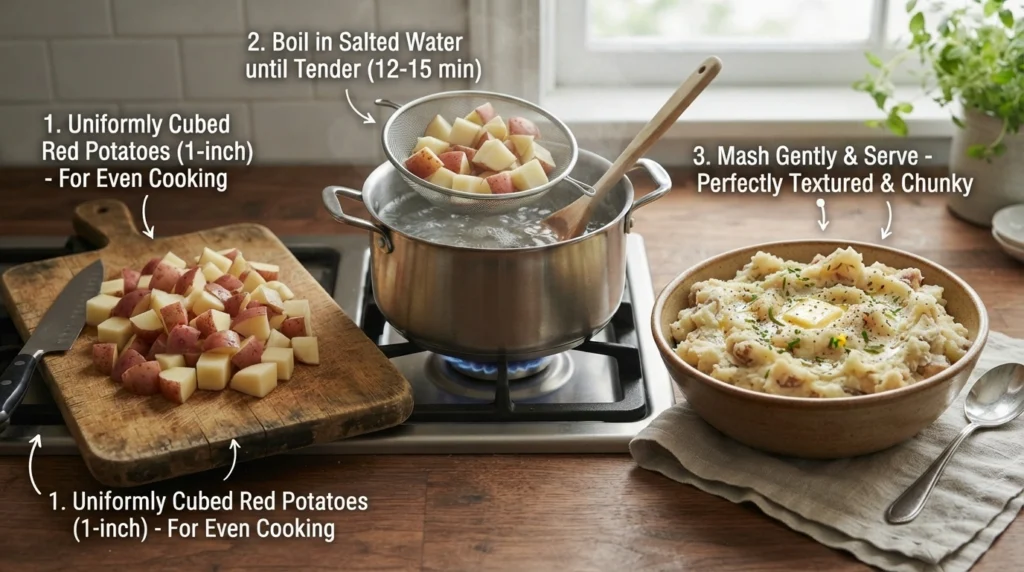
A handful of small technique choices separate great mashed potatoes from a mushy, gluey disappointment.
Common Mistakes to Avoid
- Over-mixing with a hand mixer activates too much starch, which turns the potatoes gummy instead of fluffy
- Skipping the reserved chunky portion results in a uniformly smooth texture that doesn’t match the restaurant’s signature rustic bite
- Adding cold dairy to hot potatoes can cause the mixture to seize up rather than blend smoothly; letting cream and sour cream come closer to room temperature first helps
- Under-seasoning is one of the most common complaints with homemade mashed potatoes, since potatoes absorb salt differently than many other dishes and often need more than expected
- Not draining potatoes fully leaves excess water in the pot, diluting the richness of the butter and cream
Popular Variations on LongHorn Mashed Potatoes
Once you’ve nailed the base recipe, a few simple additions can turn it into an entirely different dish depending on the occasion.
Loaded LongHorn Mashed Potatoes
Fold in shredded cheddar cheese, crumbled crispy bacon, and sliced green onions after mixing for a loaded, baked-potato-inspired version that works especially well alongside grilled steak or chicken.
Extra Garlic-Forward Version
For guests who want the garlic flavor to take center stage, roasting a full head of garlic and mashing the softened cloves directly into the potato mixture adds a deeper, sweeter garlic flavor than raw minced garlic alone.
Lighter, Lower-Fat Version
Swapping heavy cream for whole milk and reducing the butter slightly cuts down on richness while still preserving the garlic and sour cream flavor that defines the dish, making it a reasonable option for lighter weeknight meals.
Dairy-Free Adaptation
For a dairy-free version, unsweetened coconut milk or soy-based cream substitutes can replace the heavy cream and sour cream, while a plant-based butter alternative can stand in for regular butter, keeping the overall flavor profile reasonably close to the original.
Nutrition Information for LongHorn Mashed Potatoes
Because this dish relies heavily on butter, cream, and sour cream, it’s worth understanding the nutritional profile before planning it into a regular meal rotation.
Published copycat versions estimate a single serving at roughly 400 to 600 calories, depending on portion size and how closely the recipe follows the full-fat version, with a significant portion of those calories coming from fat.
What to Keep in Mind
- Calories: typically in the 400–600 range per serving for the full-fat version
- Fat content: relatively high due to butter, heavy cream, and sour cream
- Sodium: varies significantly based on added salt, so tasting as you season helps avoid oversalting
- Portion control matters more than ingredient substitution alone if you’re managing calorie or fat intake closely
For a lighter version, reducing the butter and swapping heavy cream for milk, as noted in the variations above, meaningfully lowers the calorie and fat content without eliminating the core flavor.
It’s also worth remembering that restaurant-style side dishes like this one are generally meant to be enjoyed occasionally alongside a protein and vegetable, rather than treated as an everyday staple, given how calorie-dense the full-fat version can be relative to a typical mashed potato side. longhorn mashed potatoes
What to Serve With LongHorn Mashed Potatoes
Because the dish is rich and buttery, it pairs especially well with proteins and vegetables that offer some contrast rather than competing richness.
- Grilled or pan-seared steak a classic steakhouse-style pairing that mirrors the original restaurant experience
- Parmesan crusted chicken a popular combination frequently shared by home cooks recreating steakhouse-style dinners
- Roasted or sautéed vegetables, like broccoli or Brussels sprouts, add texture and a lighter counterbalance to the richness of the potatoes
- A simple green salad with a light vinaigrette helps cut through the dish’s overall heaviness
Frequently Asked Questions
What potatoes work best for LongHorn mashed potatoes?
Russet potatoes are the top choice due to their high starch content, which produces a smooth, fluffy texture. Yukon Gold potatoes are a good alternative for a creamier result, while waxy varieties like red potatoes are best avoided.
Why are my homemade mashed potatoes gluey instead of fluffy?
Gluey texture is usually caused by over-mixing, which activates too much starch in the potatoes. Mixing just until smooth, rather than continuing to beat the potatoes, helps preserve a lighter, fluffier texture. longhorn mashed potatoes
Can I make LongHorn mashed potatoes ahead of time?
Yes, mashed potatoes can be made a day in advance and reheated gently on the stovetop or in the oven with a splash of extra cream or milk to restore moisture and creaminess.
How do I make LongHorn mashed potatoes healthier?
Swapping heavy cream for whole milk, reducing the amount of butter, and using a lighter hand with added salt can noticeably reduce the calorie and fat content while still keeping the core garlic-butter flavor intact.
Can I freeze LongHorn mashed potatoes?
Mashed potatoes with a high dairy content can be frozen, though the texture may become slightly grainy after thawing. Reheating gently while stirring in a small amount of fresh cream or butter can help restore some of the original creaminess.
What makes LongHorn’s mashed potatoes different from typical mashed potatoes?
The combination of heavy cream, sour cream, and real butter, along with a partially rustic texture from folding in coarsely mashed potato chunks, gives LongHorn’s version a distinct richness and texture compared to a standard smooth mashed potato recipe.
Conclusion
Recreating LongHorn mashed potatoes at home isn’t complicated, but a few deliberate choices make all the difference: starchy russet potatoes, a rich blend of butter, cream, and sour cream, and folding in a coarsely mashed portion for that signature rustic texture.
Whether you stick with the classic version or branch out into a loaded, extra-garlicky, or lighter variation, this copycat recipe gets you close to the steakhouse original without leaving your kitchen.
Paired with a grilled steak or Parmesan crusted chicken, it’s a comfort-food side dish worth adding to your regular dinner rotation.
References
- Simply Side Dishes. “The Original Longhorn Steakhouse Mashed Potatoes Copycat.”
- Simple Copycat Recipes. “The Best Longhorn Steakhouse Mashed Potatoes Recipe.”
- Weary Chef. “Copycat Longhorn Steakhouse Mashed Potatoes Recipe.”
- AllFreeCopycatRecipes.com. “Longhorn Steakhouse Mashed Potatoes.”
- LongHorn Steakhouse. “Full Menu.”
- USDA FoodData Central. “Potatoes, Mashed, Home-Prepared.”
- Idaho Potato Commission. “Choosing the Right Potato for the Job.”