A Complete Guide to This Crispy Favorite
Walk into almost any fast-casual or family restaurant menu and you’ll likely spot the phrase “hand breaded” attached to at least one chicken item. It’s become a signal of quality in an industry crowded with frozen, pre-packaged options.
But what does it actually mean, and does it make a real difference in taste and texture?
This guide explains exactly what sets this preparation apart, how it’s made, what it costs at popular restaurant chains, and how you can recreate the same crispy, juicy result in your own kitchen.
Whether you’re comparing menu options or planning to cook it yourself, this article covers everything worth knowing.
What Exactly Is Hand Breaded Chicken?
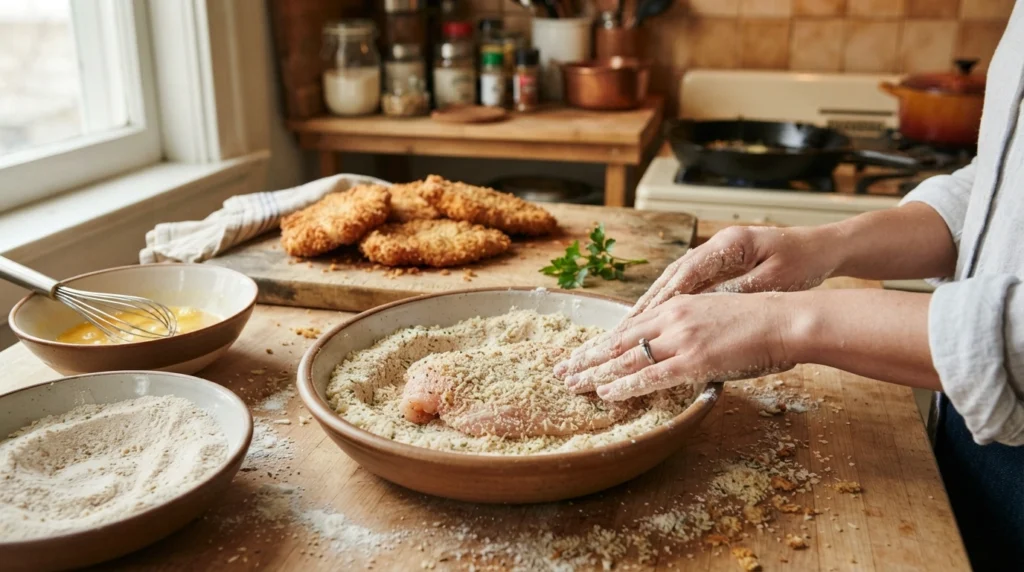
Hand breaded chicken refers to chicken pieces typically tenders, strips, or fillets that are dipped and coated by hand in a wet batter (often buttermilk-based) and then dredged in seasoned flour or breadcrumbs, rather than being coated using automated equipment or purchased pre-breaded and frozen.
The process is more labor-intensive than using frozen, machine-coated chicken, which is part of why restaurants often highlight it as a premium menu feature. The manual coating process typically results in a thicker, more textured crust with better adhesion to the meat.
Hand Breaded vs Machine Breaded Chicken
Understanding the difference between these two preparation styles helps explain why one often costs more than the other.
- Coating consistency: A manual coating process creates uneven, rustic texture, while machine coating tends to produce a smoother, more uniform crust.
- Freshness: This preparation is typically made fresh in-store rather than shipped frozen from a factory.
- Crust thickness: The hand-dipped method usually produces a thicker, craggier crust that holds seasoning better.
- Cost to produce: Because of the added labor, this method generally costs restaurants more to prepare than pre-breaded frozen alternatives.
How Hand Breaded Chicken Is Made
Most restaurants and home cooks follow a similar multi-step process to achieve the signature crunch associated with this preparation:
- Brine or marinate the chicken, often in buttermilk, to tenderize the meat and add flavor.
- Season the flour or breading mixture with salt, pepper, paprika, and other spices.
- Dip the chicken into the wet mixture, allowing excess to drip off.
- Dredge by hand in the seasoned flour or breadcrumb mixture, pressing gently to help it adhere.
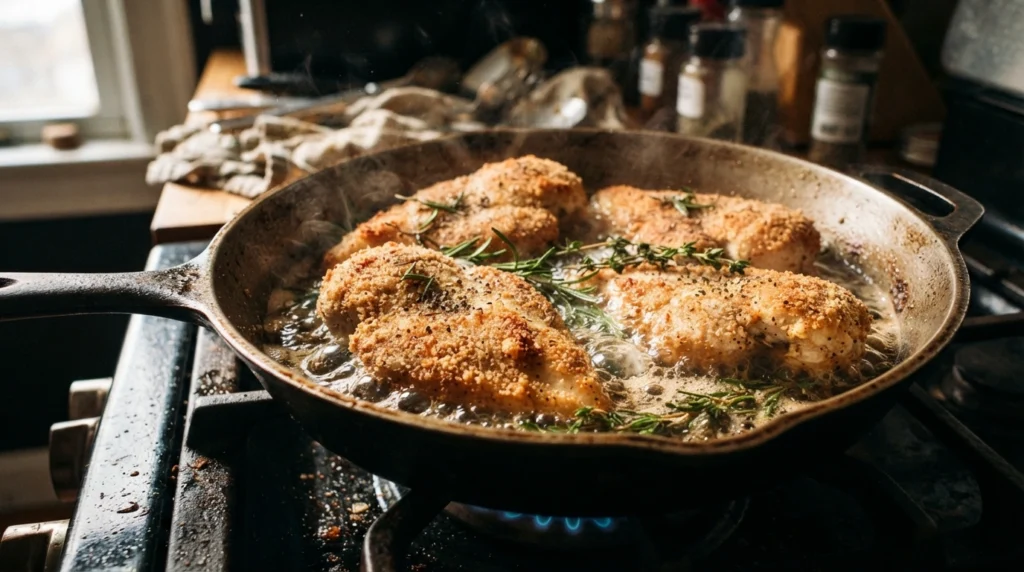
- Fry or bake until golden brown and cooked through to a safe internal temperature.
“Buttermilk’s acidity helps tenderize chicken while also helping the breading adhere more effectively during frying.” Culinary Institute of America
Why This Preparation Style Is So Popular
There are several reasons this cooking method continues to gain popularity across restaurant menus and home kitchens alike.
- Superior texture The manual process creates a thicker, more satisfying crunch compared to machine-coated alternatives.
- Better flavor absorption Because the coating is applied by hand, seasoning tends to distribute more evenly.
- Perceived freshness and quality Diners often associate this labeling with a more premium, made-to-order product.
- Customization potential Home cooks and chefs can easily adjust seasoning blends to suit different flavor profiles.
- Versatility It works equally well for tenders, sandwiches, salads, and wraps.
Texture and Crunch Factor
The craggy, uneven texture produced by hand dipping creates more surface area, which crisps up more dramatically during frying compared to a smooth, machine-applied coating.
This textural contrast is a major reason why many diners specifically seek out this preparation over standard breaded options.
Flavor Retention
Because the coating adheres more thickly and unevenly, seasoning tends to cling to the crust rather than falling off during cooking, resulting in a more consistently flavorful bite from start to finish.
Hand Breaded Chicken Price and Nutrition Comparison
Pricing and nutrition can vary significantly depending on the restaurant, portion size, and cooking method. The table below reflects commonly reported figures from several well-known chains.
| Restaurant | Portion | Approximate Price | Calories |
|---|---|---|---|
| Carl’s Jr. | 3-piece tenders | $6.49 | 420 kcal |
| Hardee’s | 5-piece tenders | $7.49 | 640 kcal |
| A&W | 3-piece tenders | N/A (varies by location) | 260 kcal |
| Hardee’s | Per single piece | N/A | 88 kcal |
As shown above, calorie counts scale closely with portion size, and pricing tends to correlate with the number of pieces included rather than any major difference in preparation quality between chains.
“All-white-meat tenders, hand-breaded and fried, are typically served with a dipping sauce and priced based on portion size across most quick-service chains.” Restaurant Menu Data Guide
How to Make Hand Breaded Chicken at Home
Choosing the Right Chicken Cut
Boneless, skinless chicken breast or tenderloins work best for hand breaded chicken, as they cook evenly and hold the coating well. Pounding thicker pieces to an even thickness helps ensure consistent cooking throughout.
Getting the Coating Right
A two-step wet-and-dry dredging process is essential for achieving a thick, textured crust. Pressing the flour mixture firmly onto the chicken, rather than simply rolling it, helps create the signature craggy texture associated with this preparation.
Cooking Methods That Work Best
- Deep frying Produces the crispiest, most restaurant-style result, typically at 350°F for 6–8 minutes depending on thickness.
- Pan frying Uses less oil while still achieving a golden, crunchy crust, though it requires more attention to avoid uneven cooking.
- Air frying A lighter alternative that still produces a satisfying crunch, though the texture is slightly less rich than deep frying.
- Baking The healthiest option, though it typically produces a less crisp exterior unless finished under a broiler.
Tips for the Crispiest Results
- Let the coated chicken rest for 10–15 minutes before frying, which helps the coating adhere more firmly.
- Maintain consistent oil temperature to avoid greasy, soggy results.
- Avoid overcrowding the pan or fryer, which can lower the oil temperature and prevent even crisping.
- Use a wire rack instead of paper towels after frying to keep the crust from becoming soggy.
- Season the flour mixture generously, since the coating carries most of the dish’s overall flavor.
Common Mistakes to Avoid
- Skipping the buttermilk soak, which affects both tenderness and how well the coating sticks.
- Not pressing the breading firmly enough, leading to coating that falls off during cooking.
- Frying at too low a temperature, which results in greasy, undercooked breading.
- Overcooking the chicken, which can dry out the meat even if the crust looks perfect.
Frequently Asked Questions
What does “hand breaded” actually mean on a restaurant menu?
It means the chicken is manually dipped and coated in batter and flour rather than pre-breaded using automated equipment or purchased frozen.
Is hand breaded chicken healthier than regular fried chicken?
Not necessarily. The nutritional difference mostly comes down to portion size and cooking method rather than the breading technique itself.
Which restaurants are known for hand breaded chicken?
Chains like Carl’s Jr., Hardee’s, and A&W specifically market this preparation style, along with several casual dining steakhouses that offer it as a menu item.
Can I make hand breaded chicken without deep frying?
Yes. Air frying and baking are both viable alternatives, though deep frying typically produces the crispiest texture.
How long does hand breaded chicken stay crispy after cooking?
It’s best eaten fresh, as the coating tends to soften within 20–30 minutes, especially if stored in a sealed container that traps steam.
Conclusion
Hand breaded chicken continues to stand out on restaurant menus because of the genuine texture and flavor differences created by manual preparation compared to machine-coated alternatives.
Whether you’re ordering it at a quick-service chain or attempting the technique at home, understanding the process from the buttermilk soak to the final fry makes it easier to appreciate why this style has earned its reputation as a crispy, satisfying favorite.
References
- Culinary Institute of America Techniques for Breading and Frying Poultry.
- USDA FoodData Central Chicken Tenders, Breaded, Restaurant Nutrition Data.
- GetFoodMenus Hand-Breaded Chicken Tenders Price and Calorie Comparison.
- MyFoodDiary Nutrition Facts for Hand-Breaded Chicken Tenders.
- Carl’s Jr. Official Menu Hand-Breaded Chicken Tenders Nutrition Information.