The Ultimate Steak Lover’s Guide
If you’ve ever walked into a LongHorn Steakhouse and caught that unmistakable smoky aroma drifting from the open flame grill, chances are you were standing near someone enjoying the longhorn fire grilled t bone. It’s one of the most talked-about menu items at the chain, and for good reason.
longhorn fire grilled t bone isn’t just another steak on a menu full of steaks it’s a signature dish built around fire, marbling, and bone-in flavor that a lot of casual steakhouses simply can’t replicate.
In this guide, we’ll break down exactly what makes the longhorn fire grilled t bone worth ordering, how it’s prepared, what it costs, how it compares to other cuts, and whether it lives up to the hype.
Whether you’re planning your next dinner out or just curious about what all the fuss is about, you’ll find everything you need right here.
What Is the Longhorn Fire Grilled T Bone?
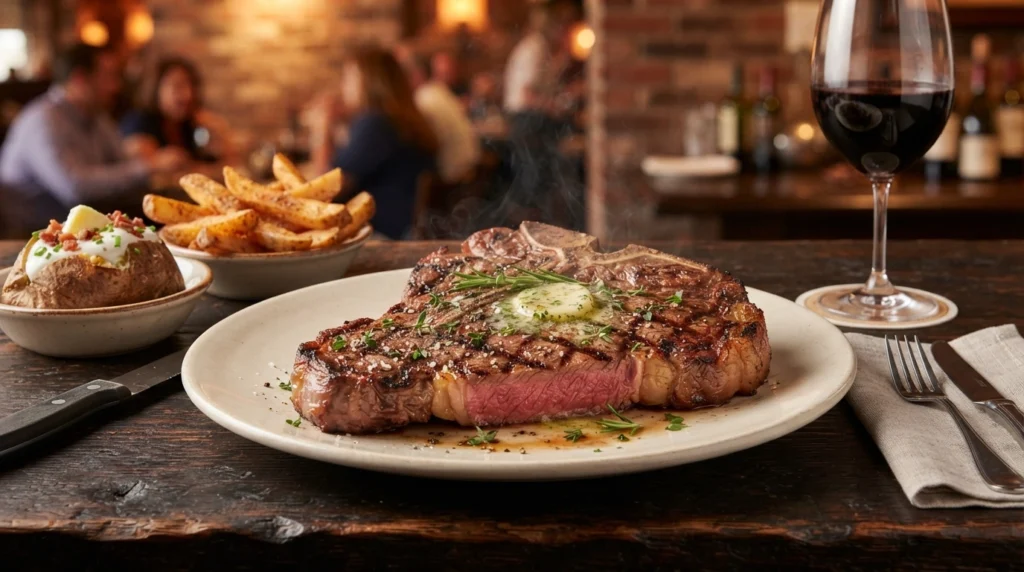
The T-bone is a classic steak cut that gets its name from the T-shaped bone running through the middle, separating two different cuts of meat in a single steak: a strip steak on one side and a small portion of tenderloin on the other.
longhorn fire grilled t bone is part of why steak lovers consider it a “two-in-one” cut you get the bold, beefy flavor of a New York strip alongside the buttery tenderness of filet mignon, all in one plate.
LongHorn Steakhouse takes this classic cut and prepares it using their fire grilling method, which involves cooking the steak directly over an open flame at high heat. This technique sears the outside quickly, locking in juices while creating a charred, smoky crust that regular pan-searing or oven-roasting can’t fully match.
“The best steaks are the ones where you can taste the fire, not just the seasoning.” a sentiment echoed by many steakhouse chefs and grill masters across the culinary world.
Why Fire Grilling Makes a Difference
The Science Behind the Sear
Cooking over an open flame creates what’s known as the Maillard reaction a chemical process where proteins and sugars in the meat react to heat, producing that deep brown crust and complex flavor.
According to food science research published by Serious Eats, this reaction is responsible for much of what people associate with “good steak flavor,” and it happens more intensely at higher, direct heat sources like open-flame grills compared to standard broilers or pans.
Why This Matters for the T-Bone Cut
Because the longhorn fire grilled t bone contains two different textures of meat, getting the sear right on both sides without overcooking either the tenderloin or the strip portion takes skill. Fire grilling allows for:
- Faster cooking times that reduce moisture loss
- A more even, intense crust across the entire surface
- A natural smoky flavor that doesn’t rely on liquid smoke or artificial seasoning
- Better caramelization on the fat cap, which enhances overall richness
This is one of the biggest reasons the longhorn fire grilled t bone has developed a loyal following. It’s not just about the cut of meat — it’s about the cooking method behind it.
How LongHorn Prepares Their Fire Grilled T-Bone
Sourcing and Cut Quality
LongHorn Steakhouse sources its steaks with attention to marbling and consistency, and the chain has publicly emphasized hand-cut steaks prepared in-house at many locations rather than pre-portioned, factory-cut meat.
This matters because hand-cutting allows for better control over thickness, which directly affects how evenly a T-bone cooks over an open flame.
The Grilling Process
- The steak is seasoned with a proprietary blend before hitting the grill
- It’s placed directly over an open flame for the initial sear
- The steak is flipped once to develop the crust on both sides
- It’s moved to control heat and finish cooking to the requested temperature
- A finishing touch, often butter-based, is added before serving
Recommended Doneness Levels
Steak experts generally agree that thicker, bone-in cuts like the T-bone benefit from being cooked to medium or medium-rare, since this preserves tenderness in the filet portion while allowing the strip side to develop full flavor.
Ordering it well-done risks drying out the smaller tenderloin section significantly faster than the larger strip side.
Longhorn Fire Grilled T Bone: Price and Value
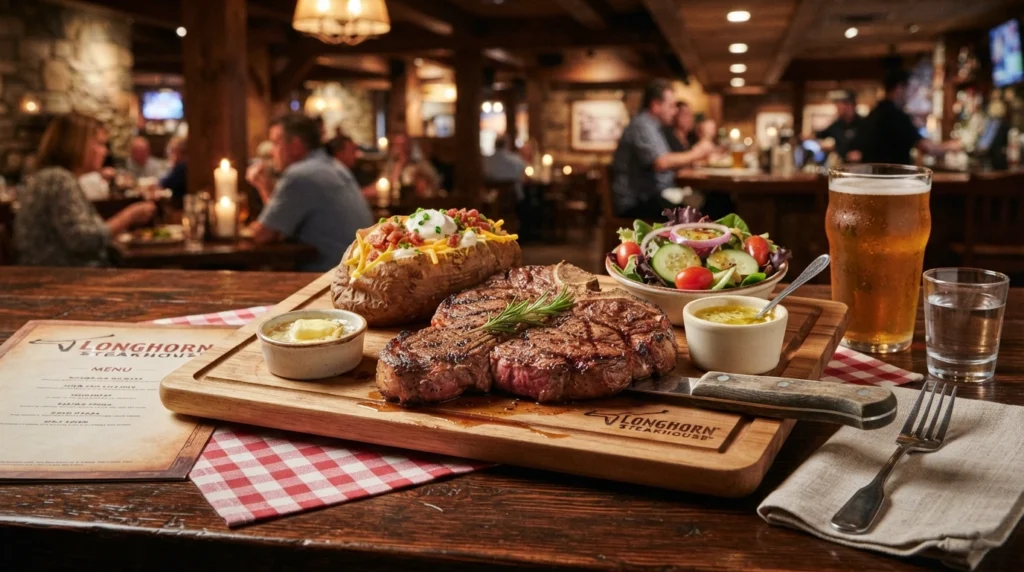
Pricing for steakhouse T-bones varies by region and portion size, but LongHorn’s fire grilled T-bone typically falls into the mid-range pricing tier compared to national steakhouse chains like Outback Steakhouse or Texas Roadhouse.
It’s generally positioned as a value option for guests wanting a larger, bone-in cut without paying premium fine-dining prices.
What’s Usually Included
- A choice of two side dishes (rice, mashed potatoes, seasonal vegetables, etc.)
- Fresh-baked bread served before the meal
- Steak sauce and seasoning options at the table
longhorn fire grilled t bone makes the overall meal feel more complete compared to ordering a steak à la carte at higher-end steakhouses, where sides are often billed separately.
How It Compares to Other Steakhouse Cuts
T-Bone vs. Ribeye
The ribeye is prized for its heavy marbling and fat content, which makes it richer and more forgiving if slightly overcooked. The T-bone, by contrast, offers more textural variety because of the two different muscle types, but it requires more precise cooking to avoid drying out the tenderloin side.
T-Bone vs. Porterhouse
A porterhouse is essentially a larger version of a T-bone, with a bigger portion of tenderloin attached. If you’re someone who loves the strip side more than the tenderloin, the T-bone is often the more balanced and affordable choice.
T-Bone vs. Sirloin
Sirloin steaks are leaner and typically more budget-friendly, but they lack the bone-in flavor boost and textural contrast that make a T-bone stand out. For diners who want a heartier, more indulgent option, the longhorn fire grilled t bone tends to win out in taste comparisons.
Tips for Ordering the Perfect Fire Grilled T-Bone
Best Practices from Steak Enthusiasts
- Order medium or medium-rare for the best balance of tenderness and flavor
- Ask for the fat cap to be well-rendered if you enjoy richer flavor
- Pair it with a simple side like mashed potatoes so the steak’s flavor stays the star
- Avoid drowning it in sauce the fire-grilled crust is meant to be tasted on its own first
“A well-cooked T-bone doesn’t need much help. The fire already did the hard work.” a common refrain among grill enthusiasts and steakhouse regulars.
Common Mistakes to Avoid
Many diners order this steak well-done out of habit, not realizing it significantly changes the eating experience for a two-textured cut like this.
Since the tenderloin side is naturally leaner and smaller, overcooking it leads to a dry, chewy bite that doesn’t match the juicier strip side. If you’re trying the longhorn fire grilled t bone for the first time, medium is generally considered the safest and most flavorful starting point.
Nutritional Considerations
A T-bone steak, being a combination of strip and tenderloin, tends to fall in a moderate range for fat and protein content compared to fattier cuts like ribeye.
According to the USDA FoodData Central database, beef T-bone steak provides a substantial source of protein, iron, and B-vitamins per serving, making it a nutritionally dense option despite being a treat-style meal rather than an everyday dish.
Diners watching sodium or fat intake should be mindful of the seasoning blend and butter finish often used in fire-grilling preparation, as these add flavor but also increase overall calorie and sodium content per serving.
Is the Longhorn Fire Grilled T Bone Worth Trying?
Based on cooking technique, portion value, and flavor profile, the longhorn fire grilled t bone holds up well against competitors in the casual steakhouse category.
It’s not positioned as a fine-dining, dry-aged experience, but for the price point and the fire-grilled preparation method, it delivers consistent, flavorful results that satisfy the craving for a hearty, bone-in steak.
For guests who prioritize flavor complexity from a single cut, the two-textured nature of the longhorn fire grilled t bone combined with the open-flame cooking method makes it one of the more compelling options on a casual steakhouse menu.
Frequently Asked Questions
Is the LongHorn fire grilled T-bone a good cut of steak?
Yes. The longhorn fire grilled t bone combines strip steak and tenderloin in one cut, and LongHorn’s fire-grilling method enhances the natural flavor with a smoky, charred crust that many diners find superior to pan-seared alternatives.
What sides come with the fire grilled T-bone at LongHorn?
Most locations include a choice of two sides, such as mashed potatoes, seasonal vegetables, or rice, along with fresh bread served before the meal, though exact offerings can vary by location.
What is the best way to order a T-bone for maximum flavor?
Most steak experts recommend medium or medium-rare doneness, since the tenderloin portion of the longhorn fire grilled t bone is leaner and can dry out quickly if cooked past that point.
How does fire grilling differ from regular grilling?
Fire grilling involves cooking directly over an open flame at high, consistent heat, which sears the surface faster and creates a more intense crust than indirect or lower-heat grilling methods typically produce.
Is a T-bone healthier than a ribeye?
Generally, yes. A T-bone tends to have less overall fat marbling than a ribeye because it includes a portion of lean tenderloin, making it a slightly leaner option while still offering rich flavor.
Conclusion
The longhorn fire grilled t bone earns its reputation as one of the more satisfying steakhouse orders available at a casual dining price point.
Between the open-flame cooking method, the two-textured cut, and the value-driven pricing that includes sides and bread, it checks a lot of boxes for steak lovers who want flavor without a fine-dining price tag.
If you haven’t tried it yet, ordering it medium and pairing it with a simple side is the best way to experience exactly why this dish has such a strong following.
References
- Serious Eats – “The Food Lab: The Maillard Reaction and Why It Matters for Steak”
- USDA FoodData Central – Beef, T-bone steak, nutrient profile
- LongHorn Steakhouse Official Menu and Preparation Information
- Certified Angus Beef – “Understanding Steak Cuts: T-Bone vs. Porterhouse”
- National Cattlemen’s Beef Association – Beef Cut Education Resources