The Complete Guide to Perfect Texture Every Time
There’s a narrow window between undercooked and mushy where fresh steamed asparagus goes from forgettable to genuinely delicious, and hitting that window consistently is easier than most people think once you understand what’s actually happening in the pot.
This guide walks through everything you need how to pick the right spears, exact timing by thickness, common mistakes that ruin texture, nutrition information, and serving ideas that make this simple side dish worth repeating.
Whether you’re steaming a bunch for a weeknight dinner or prepping a batch for meal planning, the goal is the same: vibrant green color, a tender bite, and just enough resistance left that it doesn’t collapse the moment your fork touches it.
“Steaming asparagus is a highly recommended cooking method due to its ability to preserve the delicate flavor and nutrients of the vegetable.”
Why Steaming Is One of the Best Ways to Cook Asparagus
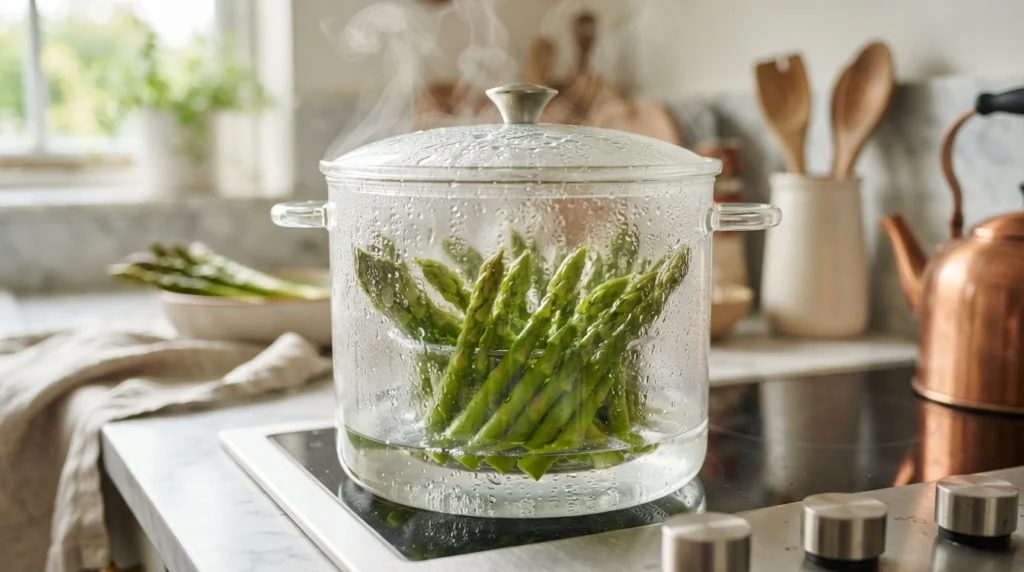
Compared to boiling, steaming keeps the spears from sitting directly in water, which limits how many water-soluble vitamins leach out during cooking.
Fresh steamed asparagus retains more of its natural nutrients than boiled asparagus, while also avoiding the risk of a scorched exterior that can happen with high-heat roasting or sautéing if you’re not paying close attention. fresh steamed asparagus
Steaming is also more forgiving in terms of equipment. You don’t need a fancy setup a pot with a lid and a basic steamer basket, a metal colander, or even a fine mesh strainer set over simmering water will all get the job done. fresh steamed asparagus
Key Benefits of Steaming Over Other Methods
- Preserves more nutrients than boiling, since the spears never sit submerged in water
- Keeps color vibrant, avoiding the dull, olive-green tint that overboiled vegetables often develop
- Reduces the risk of burning, unlike high-heat roasting or pan-searing
- Requires minimal equipment, making it accessible even without specialty kitchen tools
- Cooks quickly, typically finishing in under ten minutes depending on spear thickness
How to Choose the Best Asparagus for Steaming
Good results start before the pot ever touches the stove. Fresh steamed asparagus, high-quality spears make a noticeable difference in both flavor and texture once cooked.
Look for spears with tightly closed, compact tips an open or “flowering” tip is a sign the asparagus is past its prime. The stalks should feel firm and snap cleanly when bent, rather than bending limply.
Uniform thickness across the bunch also matters, since spears of different sizes cook at different rates and can leave you with some pieces mushy while others remain undercooked.
Signs of Fresh Asparagus
- Tightly closed tips with no visible flowering or wilting
- Firm, snappable stalks that don’t bend without breaking
- Vibrant green color, without dry, woody-looking bases
- Consistent thickness throughout the bunch
- No sliminess or soft spots, which usually indicate the spears are past their prime
Prepping Asparagus Before Steaming
A little prep work goes a long way toward getting fresh steamed asparagus right. The most important step is trimming the woody ends, which are tough, fibrous, and unpleasant to eat no matter how long you cook them.
The simplest trimming method is to hold a spear near the middle and gently bend the bottom end until it snaps naturally asparagus tends to break right where the tender part meets the woody part, so you don’t have to guess where to cut.
For thicker spears, some cooks also lightly peel the lower third with a vegetable peeler, which helps the base cook at roughly the same rate as the more delicate tip. fresh steamed asparagus
How Long to Steam Fresh Asparagus
Timing is the single biggest factor separating great steamed asparagus from a disappointing batch, and it depends almost entirely on spear thickness.
Steaming Time by Spear Thickness
- Thin spears (pencil-thin): 1 to 3 minutes
- Medium spears: 3 to 5 minutes
- Thick spears: 5 to 7 minutes
Because ovens and stovetops vary, and because “thick” and “thin” are somewhat subjective, the most reliable method is to check for doneness directly rather than relying on the clock alone.
Pierce a spear near its thickest point with a fork it should slide in with a small amount of resistance, not glide through effortlessly. Asparagus continues cooking slightly from residual heat even after it’s removed from the steamer, so pulling it just before it looks fully done usually results in a better final texture. fresh steamed asparagus
Step-by-Step: How to Steam Asparagus on the Stove
- Trim the woody ends by snapping or cutting each spear at its natural break point
- Add about one to two inches of water to a pot, keeping the water level below where the steamer basket will sit
- Bring the water to a boil, then reduce slightly so it maintains a steady simmer
- Arrange the spears in a single layer in the steamer basket, avoiding overcrowding so steam can circulate evenly
- Cover the pot tightly and steam according to spear thickness, checking for doneness starting at the lower end of the time range
- Remove immediately once tender, since asparagus continues softening even off the heat
If you don’t have a dedicated steamer basket, a metal colander or fine-mesh strainer set over a pot of simmering water works just as well, as long as the bottom of the basket stays above the waterline rather than sitting in it.
Common Mistakes That Ruin Steamed Asparagus
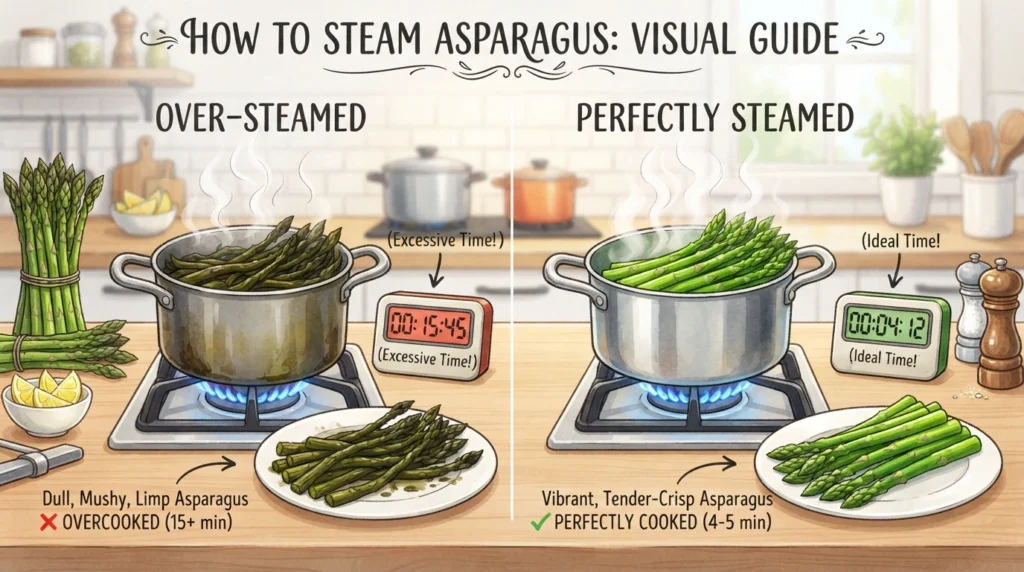
A few small missteps account for most disappointing results, and nearly all of them are easy to fix once you know what to watch for.
- Steaming too long, which leads to mushy, dull-colored spears that lose their structure
- Using too much water, which can cause the asparagus to boil rather than steam, washing out flavor and nutrients
- Skipping the lid, which lets steam escape and extends cooking time unpredictably
- Not trimming the woody ends, leaving tough, fibrous bases that are unpleasant to chew
- Overcrowding the basket, which prevents even steam circulation and leads to inconsistent doneness across the batch
Nutrition Benefits of Fresh Steamed Asparagus
Beyond its light, slightly earthy flavor, fresh steamed asparagus is genuinely nutrient-dense for how few calories it contains. A typical serving is low in calories while offering a meaningful amount of fiber, potassium, and folate.
Key Nutrients in Steamed Asparagus
- Vitamin K — supports healthy blood clotting and bone metabolism
- Vitamin C — an antioxidant that supports immune function
- Folate — important for cell growth and particularly relevant during pregnancy
- Potassium — supports healthy blood pressure regulation
- Fiber, including inulin, a prebiotic fiber that supports gut bacteria
Because steaming avoids submerging the spears in water, it does a better job of preserving these nutrients compared to boiling, where a portion of water-soluble vitamins can leach out into the cooking liquid. fresh steamed asparagus
Serving Ideas for Fresh Steamed Asparagus
Once your asparagus is perfectly tender, a few simple additions can turn it from a plain side dish into something worth building a meal around.
- A squeeze of fresh lemon juice brightens the natural earthy flavor without overwhelming it
- A drizzle of good olive oil and flaky sea salt keeps things simple and lets the vegetable’s natural sweetness come through
- Shaved Parmesan adds a savory, umami-rich finish that pairs especially well with steak or roasted chicken
- A light balsamic reduction adds acidity and a touch of sweetness for a slightly more elevated presentation
- Toasted almonds or a sprinkle of everything-bagel seasoning add texture contrast for guests who want a bit of crunch
Most sources agree that seasoning should be added after steaming rather than during, since cooking herbs or spices directly in the steam tends to produce a muted flavor compared to seasoning the fresh steamed asparagus.
Frequently Asked Questions
How long should I steam fresh asparagus?
Steaming time depends on spear thickness: roughly 1 to 3 minutes for thin spears, 3 to 5 minutes for medium spears, and 5 to 7 minutes for thick spears. Checking with a fork for slight resistance is more reliable than relying on the clock alone.
How do I know when steamed asparagus is done?
Properly steamed asparagus should be tender enough to pierce easily with a fork but still offer a small amount of resistance, similar to a well-cooked green bean. It should bend slightly without going limp or falling apart. fresh steamed asparagus
Can I steam asparagus without a steamer basket?
Yes, a metal colander or fine-mesh strainer placed over a pot of simmering water works just as well as a dedicated steamer basket, as long as the bottom stays above the waterline. fresh steamed asparagus
Does steaming asparagus reduce its nutrients?
Steaming preserves more nutrients than boiling, since the spears aren’t submerged in water where water-soluble vitamins can leach out. Some nutrient loss is normal with any cooking method, but steaming minimizes it compared to boiling.
Why does my steamed asparagus turn out mushy?
Mushy asparagus is almost always the result of overcooking. Since asparagus continues to soften slightly from residual heat after being removed from the steamer, it’s best to take it off the heat just before it looks fully tender. fresh steamed asparagus
Can I season asparagus while it’s steaming?
It’s generally better to season after cooking rather than during, since herbs and spices added directly to the steaming process tend to produce a milder, less distinct flavor than seasoning the asparagus once it’s finished.
Conclusion
Fresh steamed asparagus is one of those simple side dishes that rewards a little attention to detail: choosing firm, tightly closed spears, trimming the woody ends properly, and timing the steam based on thickness rather than guesswork.
Get those fundamentals right, and you’ll consistently land in that ideal window between undercooked and mushy tender, vibrant green, and full of the nutrients steaming is specifically good at preserving. fresh steamed asparagus
Whether you keep it simple with lemon and olive oil or dress it up with Parmesan and a balsamic drizzle, mastering this one basic technique makes it easy to turn a humble vegetable into a side dish worth making on repeat.
References
- Cookin’ Canuck. “How to Steam Asparagus.”
- Tasting Table. “Perfect Steamed Asparagus Recipe.”
- ChefsKnowHow. “How Long to Steam Asparagus on Stove: The Ultimate Guide for Perfectly Cooked Asparagus.”
- Edible Times. “How to Cook Asparagus.”
- Vegetable Recipes. “How to Steam Asparagus.”
- Harvard T.H. Chan School of Public Health. “Vitamin K.”
- USDA FoodData Central. “Asparagus, Cooked, Boiled, Drained.”