A Complete Guide to This Timeless Classic
Few dishes have earned a permanent spot on menus across the world quite like this one. From casual diners to fine dining rooms, caesar salad remains one of the most consistently ordered salads on the planet, nearly a century after it was first created almost by accident.
This guide covers where the dish actually came from, what defines an authentic version, how it compares in price and calories across popular restaurant chains, and how to make a genuinely great one at home.
Whether you’re curious about its history or planning to recreate it yourself, this article answers the questions people search for most.
What Exactly Is a Caesar Salad?
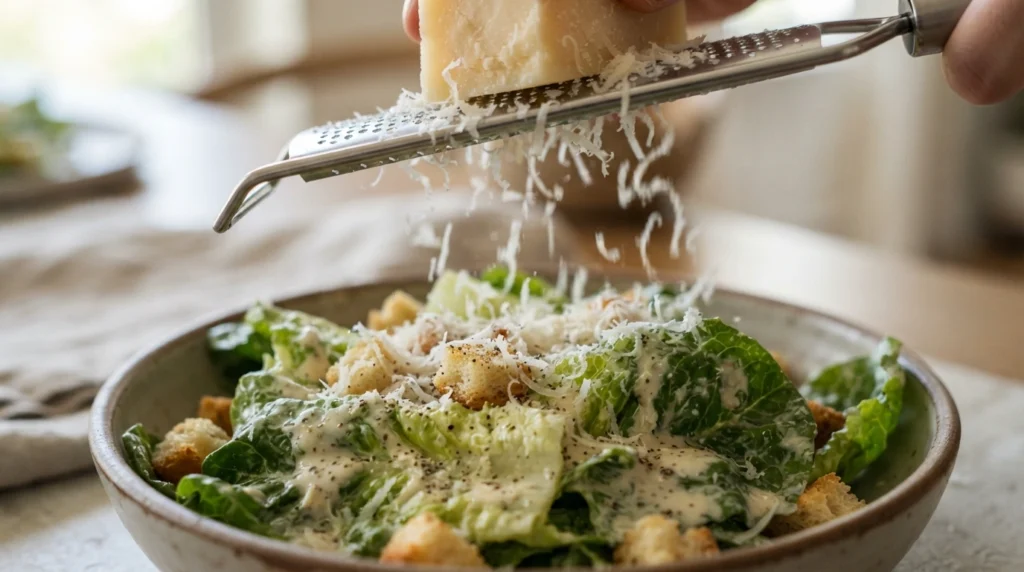
At its core, caesar salad is built from crisp romaine lettuce tossed in a creamy, garlicky dressing made with egg yolk, olive oil, Parmesan cheese, lemon juice, and Worcestershire sauce, then finished with croutons and shaved Parmesan.
Anchovies are often included in the dressing, either blended in directly or used as a garnish, giving the dish its distinctive savory depth.
Despite countless modern variations grilled chicken, shrimp, salmon, kale substitutions the defining elements remain the same: crisp lettuce, a bold garlicky dressing, and a generous amount of cheese and crunch.
The Real History Behind This Dish
Contrary to popular belief, this salad has nothing to do with the Roman emperor Julius Caesar. In 1924, during Prohibition, Italian-born restaurateur Cesare Cardini relocated his restaurant from San Diego to Tijuana, Mexico, allowing him to legally serve alcohol.
As the story goes, a Fourth of July weekend rush left the restaurant short on ingredients, prompting Cardini to improvise using what he had on hand.
His daughter Rosa later published his original recipe, which called for garlic-infused olive oil, coddled eggs, lemon juice, Worcestershire sauce, and Parmesan cheese served over whole romaine leaves and croutons.
While some historical accounts credit his brother Alex or a member of his kitchen staff with the actual invention, the Cardini name has remained permanently attached to the dish.
“It’s a recipe that has traveled all over the world, and everyone loves it.” Chef Javier Plascencia, whose family runs the original restaurant in Tijuana
Original Recipe vs Modern Variations
The caesar salad served today often differs meaningfully from its original form:
- Original version: Used whole romaine leaves meant to be eaten by hand, coddled eggs, and no added protein.
- Modern version: Typically uses chopped romaine, pasteurized egg-based dressing for food safety, and often includes grilled chicken or another protein.
- Dressing consistency: The original was lighter and more oil-based, while many modern versions use a thicker, mayonnaise-style dressing.
- Anchovy use: Some modern recipes omit anchovies entirely, while the traditional version relied on Worcestershire sauce for that same umami depth.
Why This Salad Has Remained So Popular
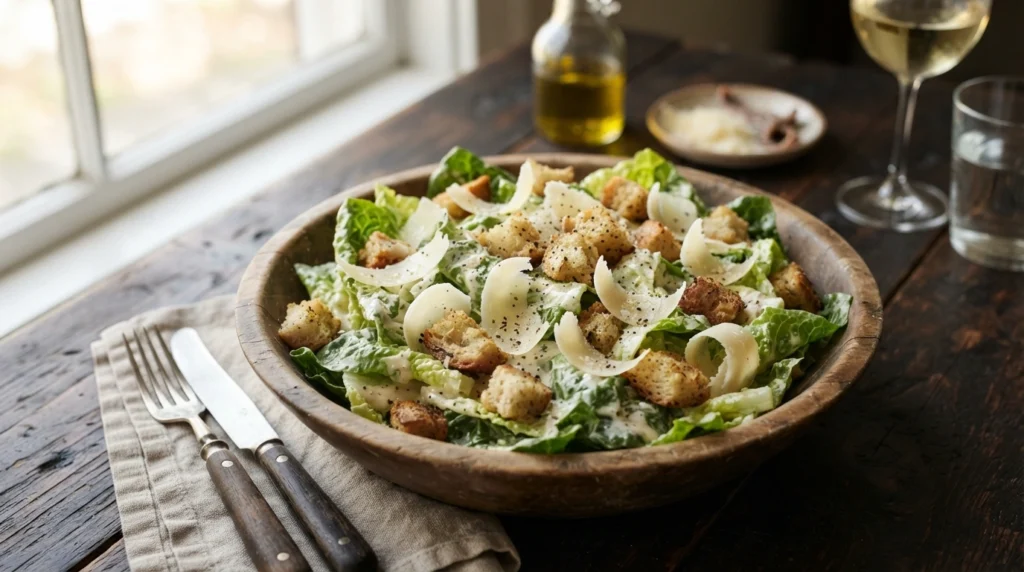
There are several reasons this dish has stood the test of time on restaurant menus worldwide.
- Balanced flavor profile The combination of salty, savory, and tangy elements appeals to a wide range of palates.
- Versatility It works as a starter, a side dish, or a full entrée when topped with protein.
- Simple, recognizable ingredients Diners generally know what to expect, which builds trust in the dish.
- Easy customization It adapts well to dietary preferences, from anchovy-free to protein-added versions.
- Strong textural contrast Crisp lettuce, crunchy croutons, and creamy dressing create a satisfying bite every time.
Nutritional Considerations
While often perceived as a “healthy” option, this dish can vary dramatically in calorie count depending on portion size, dressing quantity, and added toppings.
A basic side portion tends to run noticeably lower in calories than an entrée-sized version topped with grilled chicken or fried croutons.
Regional and Restaurant Variations
Different restaurant chains put their own spin on the classic, often adjusting dressing richness, crouton style, or cheese quantity, which explains why calorie counts and pricing can vary so widely between establishments.
Caesar Salad Price and Nutrition Comparison
Pricing and calorie counts vary significantly depending on the restaurant and portion size. The table below reflects commonly reported figures from several well-known chains.
| Restaurant | Portion | Approximate Price | Calories |
|---|---|---|---|
| Olive Garden | Side salad | $5.49 | 340 kcal |
| Red Lobster | Full entrée | $9.99 | 560 kcal |
| 99 Restaurant | Full salad | N/A | 450 kcal |
| LongHorn Steakhouse | Side / Full entrée | Varies | 250 / 670 kcal |
As shown above, ordering the side-sized portion instead of the full entrée version can cut the calorie count by more than half, making portion choice one of the biggest factors in how this dish fits into a balanced meal.
“Restaurant croutons generally use a lot more oil or butter for extra crunchiness and flavor compared to homemade versions.” — Ask the Food Geek Nutrition Analysis
How to Make an Authentic Version at Home
Choosing the Right Lettuce
Romaine hearts are the traditional choice, offering the right balance of crunch and structure to hold up against a thick, creamy dressing without wilting quickly.
Building the Dressing
A proper dressing typically combines egg yolk (or a pasteurized substitute), Dijon mustard, garlic, lemon juice, Worcestershire sauce, and olive oil, whisked together until emulsified, then finished with grated Parmesan.
Making Better Croutons
- Cut day-old bread into even cubes for consistent toasting.
- Toss with olive oil, garlic, and a pinch of salt.
- Bake at 375°F until golden and crisp, tossing halfway through.
- Let cool completely before adding to the salad to preserve crunch.
Tips for a Better Homemade Salad
- Chill your serving bowl beforehand to help keep the lettuce crisp longer.
- Dress the lettuce just before serving to avoid sogginess.
- Use freshly grated Parmesan rather than pre-shredded, which often contains anti-caking agents that affect texture.
- Balance the anchovy flavor carefully a small amount enhances depth without making the dressing taste overly fishy.
- Toast croutons in the oven, not a pan, for more even, consistent crispness.
Common Mistakes to Avoid
- Over-dressing the lettuce, which can make the salad soggy and overly heavy.
- Using pre-made bottled dressing exclusively, which often lacks the depth of a freshly made version.
- Skipping fresh lemon juice, resulting in a flatter, less balanced flavor.
- Adding croutons too early, causing them to lose their signature crunch before serving.
Frequently Asked Questions
Who actually invented the Caesar salad?
The dish is most widely credited to Cesare Cardini, an Italian-born restaurateur who created it in 1924 at his restaurant in Tijuana, Mexico, though some historical accounts credit his brother or a member of his kitchen staff.
Does an authentic Caesar salad contain anchovies?
Traditionally, Worcestershire sauce provided the savory depth rather than direct anchovies, though many modern recipes include anchovies either blended into the dressing or as a garnish.
How many calories are typically in a Caesar salad?
This varies widely by portion and restaurant, ranging from around 250 calories for a small side salad up to 670 calories or more for a full entrée-sized version.
Is a Caesar salad a healthy meal option?
It can be, particularly as a side portion with dressing on the side, though entrée-sized versions with heavy dressing and fried toppings can be significantly higher in calories and sodium.
Can this salad be made without raw eggs?
Yes, most modern recipes use pasteurized eggs or omit raw egg entirely, relying on mayonnaise or Dijon mustard to achieve a similar creamy texture.
Conclusion
Nearly a century after its accidental creation in a Tijuana restaurant, this dish remains one of the most enduring items on menus worldwide, thanks to its balanced flavor, adaptability, and simple but memorable combination of ingredients.
Whether you’re comparing calorie counts across restaurant chains or attempting to recreate the original tableside version at home, understanding its history and technique makes it easier to appreciate why this classic has never gone out of style.
References
- Britannica Caesar Salad: Origins, Description, and Ingredients.
- UCHealth The Origin of Caesar Salad Plus the Original Recipe.
- San Diego Union-Tribune / Goodreads The Iconic Caesar Salad Turns 100.
- Ask the Food Geek Caesar Salad Calories: A Breakdown by Ingredient.
- Eat This, Not That! Caesar Salad Comparison Across Major Restaurant Chains.
- GetFoodMenus Caesar Salad Price and Calorie Data.