A Complete Guide to This Bold Steak Cut
If you’ve scrolled through a butcher’s display case or a steakhouse menu and spotted a thick, bone-in cut with an oddly satisfying name, chances are you’ve come across the outlaw ribeye.
It looks rugged, it eats even better, and it has quickly become one of the most requested cuts among home grillers and professional chefs alike.
This guide breaks down everything you need to know what makes this cut unique, how it compares to a standard ribeye, the best ways to cook it, and where you can buy one for yourself.
Whether you’re planning a backyard cookout or simply curious about steak terminology, this article covers it all in one place.
What Exactly Is an Outlaw Ribeye?
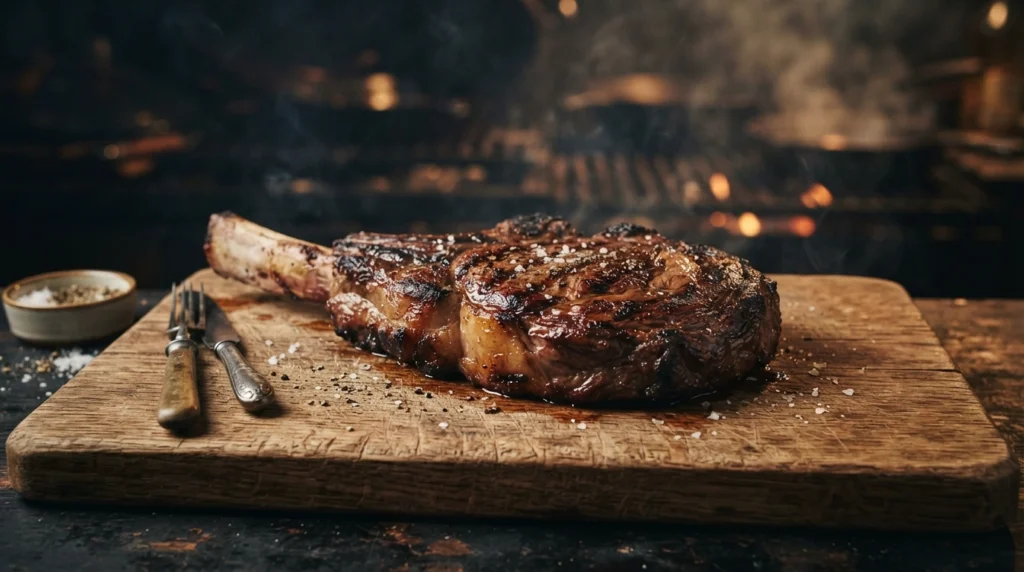
An outlaw ribeye is a bone-in ribeye steak that includes a small section of the “finger meat” the spinalis dorsi, often called the ribeye cap still attached along the edge of the bone.
Unlike a tomahawk, which keeps the entire rib bone intact for a dramatic presentation, outlaw ribeye cut typically has the bone trimmed shorter, usually to just an inch or two.
The name “outlaw” refers to the rustic, untamed shape of the steak. Because the bone isn’t fully frenched (cleaned of connective tissue) like a tomahawk, the cut retains a rugged, natural look hence the name.
Outlaw Ribeye vs Regular Ribeye
The difference between outlaw ribeye and a standard boneless ribeye comes down to three main factors:
- Bone presence: A standard ribeye is boneless, while this cut retains part of the rib bone, which adds flavor during cooking.
- Fat cap and spinalis muscle: This cut usually includes more of the flavorful cap muscle, known for its buttery texture.
- Portion size: Because of the bone and extra muscle, this steak tends to be larger and heavier than a typical boneless portion.
Where Does the Outlaw Ribeye Come From?
This steak is cut from the rib primal section of the cow, specifically ribs six through twelve. It’s essentially a bone-in ribeye with a short “outlaw” style bone, positioned between a standard bone-in ribeye and a full tomahawk in terms of bone length and presentation.
Butchers often market this cut under different regional names, but the defining trait remains consistent: a partially trimmed bone paired with generous marbling throughout the eye of the steak.
Why Choose This Cut? Key Benefits
There are several reasons steak lovers are increasingly choosing this option over a traditional boneless cut.
- Enhanced flavor from the bone Cooking with the bone in helps retain moisture and adds a subtle richness to the meat near the bone.
- Impressive presentation The rustic bone makes it a standout centerpiece for dinner parties or special occasions.
- Generous marbling This cut is known for consistent intramuscular fat, which renders down during cooking for a juicy bite.
- Great portion size for sharing Its larger size makes it ideal for two people to split.
- Versatility in cooking methods It performs well on a grill, in a cast-iron pan, or in the oven.
Flavor and Marbling
The marbling found throughout outlaw ribeye is one of its defining characteristics. Fat renders slowly during cooking, basting the meat from within and creating a tender, juicy texture that many steak enthusiasts prefer over leaner cuts.
The Bone-In Advantage
Cooking meat on the bone is believed by many chefs to improve flavor, primarily because the bone insulates the surrounding meat, allowing for slower, more even cooking near that section of the steak.
How to Cook This Steak Cut Properly
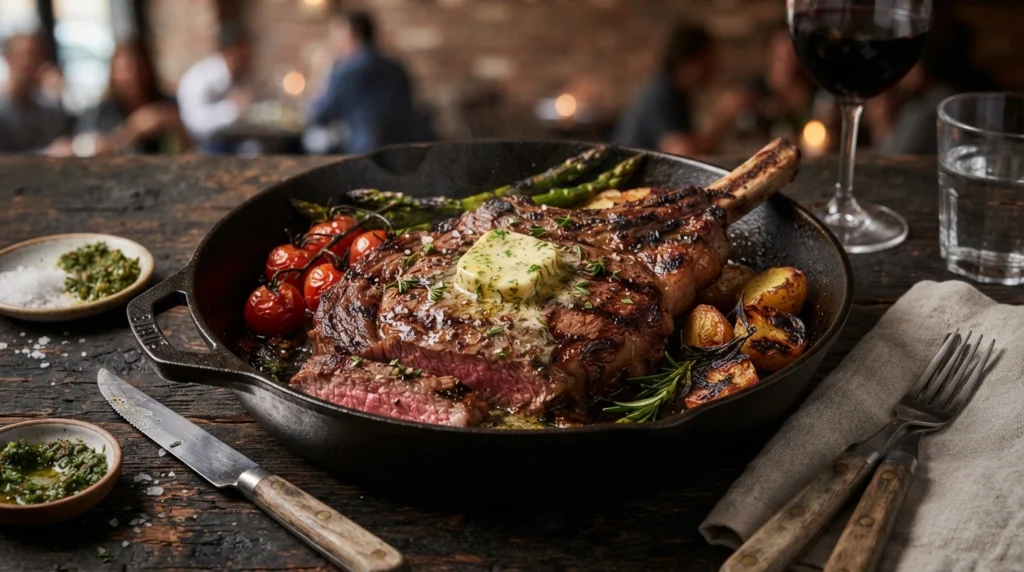
Getting the best results from outlaw ribeye depends heavily on technique. Below are the three most popular cooking methods.
Grilling Method
- Bring the steak to room temperature for about 30–40 minutes before grilling.
- Season generously with coarse salt and cracked black pepper.
- Sear over high heat for 3–4 minutes per side.
- Move to indirect heat to finish cooking to your desired doneness.
- Rest for 8–10 minutes before slicing.
Pan-Searing Method
- Heat a cast-iron skillet until it’s smoking hot.
- Add a high smoke-point oil, such as avocado oil.
- Sear each side for 3–5 minutes, basting with butter and herbs.
- Finish in a preheated oven at 400°F if needed for thicker cuts.
Reverse Sear Method
Outlaw ribeye works particularly well for a thick, bone-in cut like this one:
- Slow-cook the steak in a low oven (around 250°F) until it reaches roughly 10–15°F below your target temperature.
- Rest briefly.
- Sear quickly in a hot pan or grill to develop a crust.
“The reverse sear method is one of the most reliable ways to achieve an evenly cooked, restaurant-quality crust on thicker steaks.” Culinary Institute of America
Nutrition Facts
A typical 8-ounce serving of this cut (cooked, trimmed) provides approximately:
- Calories: 550–600 kcal
- Protein: 45–50 grams
- Total Fat: 40–45 grams
- Saturated Fat: 16–18 grams
- Iron: Roughly 20% of daily recommended value
- Zinc: Roughly 45% of daily recommended value
According to the USDA FoodData Central database, beef rib cuts are a strong source of protein, iron, zinc, and vitamin B12, making them a nutrient-dense option when consumed in moderation.
Where to Buy This Steak Cut
Specialty butcher shops, high-end grocery chains, and online meat delivery services are the most reliable sources for finding outlaw ribeye.
Because the trimming style can vary by butcher, it’s worth asking specifically for the short bone-in ribeye with the cap intact, or requesting it by its outlaw-style name if the butcher recognizes the term.
Tips for Selecting the Best Cut at the Store
- Look for bright red color with white, evenly distributed marbling avoid grayish or dull-colored meat.
- Check bone length a shorter, partially trimmed bone typically indicates the correct style of cut.
- Ask about aging dry-aged versions tend to have deeper flavor but a higher price point.
- Prioritize thickness a steak at least 1.5 inches thick will cook more evenly and stay juicier.
- Buy from a trusted butcher a knowledgeable butcher can confirm the exact trim and origin of the meat.
“Marbling is the single most important visual indicator of flavor and tenderness in a ribeye-style cut.” American Meat Science Association
Common Mistakes to Avoid When Cooking This Cut
- Skipping the resting period, which causes juices to escape when slicing too early.
- Cooking straight from the refrigerator, leading to uneven doneness.
- Using low-quality oil with a low smoke point, which can burn and add bitterness.
- Overcrowding the pan, which lowers the temperature and prevents a proper sear.
- Cutting against inconsistent grain direction, which can make slices tougher to chew.
Frequently Asked Questions
What is an outlaw ribeye exactly?
Outlaw ribeye a bone-in ribeye steak with a short, partially trimmed bone and the cap muscle intact, offering more flavor and a rustic presentation compared to a boneless ribeye.
Is this cut the same as a tomahawk steak?
No. While both are bone-in ribeye cuts, a tomahawk has a long, fully frenched bone, while this style has a much shorter, less-trimmed bone.
How much does this steak typically cost?
Pricing varies by region and grade, but it generally falls between standard bone-in ribeye and tomahawk pricing, often ranging from $18 to $35 per pound depending on quality and aging.
What’s the best internal temperature for cooking it?
Most chefs recommend pulling the steak at 125°F for medium-rare, allowing for a slight temperature rise during resting.
Can beginners cook this cut successfully at home?
Yes. With a meat thermometer and basic searing technique, even first-time cooks can achieve excellent results.
Conclusion
The outlaw ribeye offers a compelling middle ground between a standard bone-in ribeye and a showstopping tomahawk rich marbling, a satisfying bone-in bite, and a rustic presentation that works for both casual dinners and special occasions.
Whether you’re grilling, pan-searing, or trying a reverse sear for the first time, understanding the cut’s origin, nutrition profile, and proper cooking technique will help you get the most flavor and value out of every purchase.
References
- USDA FoodData Central Beef, Rib, Ribeye Cap Steak, Nutrient Data.
- American Meat Science Association Meat Quality and Marbling Standards.
- Culinary Institute of America Techniques for Cooking Thick-Cut Steaks.
- North American Meat Institute Beef Cut Terminology and Grading Guide.
- National Cattlemen’s Beef Association Beef Cut Charts and Cooking Recommendations.