What It Is, How It’s Made, and How to Use It
Walk past the deli counter or specialty cheese section of most grocery stores and you’ll likely spot a distinctive, half-moon-shaped block labeled “Longhorn.” Longhorn white cheddar is one of the more approachable, versatile cheeses in that category mild, creamy, and easy to slice, melt, or snack on straight from the block.
Despite the name, it isn’t a single brand or a single recipe; it’s a style of cheese defined largely by its shape and texture rather than one fixed formula.
This guide breaks down exactly what Longhorn white cheddar is, how it differs from both standard cheddar and its more common orange counterpart, where the name actually comes from, and the best ways to use it in the kitchen.
Whether you’ve picked it up out of curiosity or you’re trying to figure out whether it can substitute for a recipe that calls for standard cheddar, this should clear up exactly what you’re working with.
“Longhorn is a style of American Colby cheese defined by its round, long, cylindrical shape.”
What Is Longhorn White Cheddar?
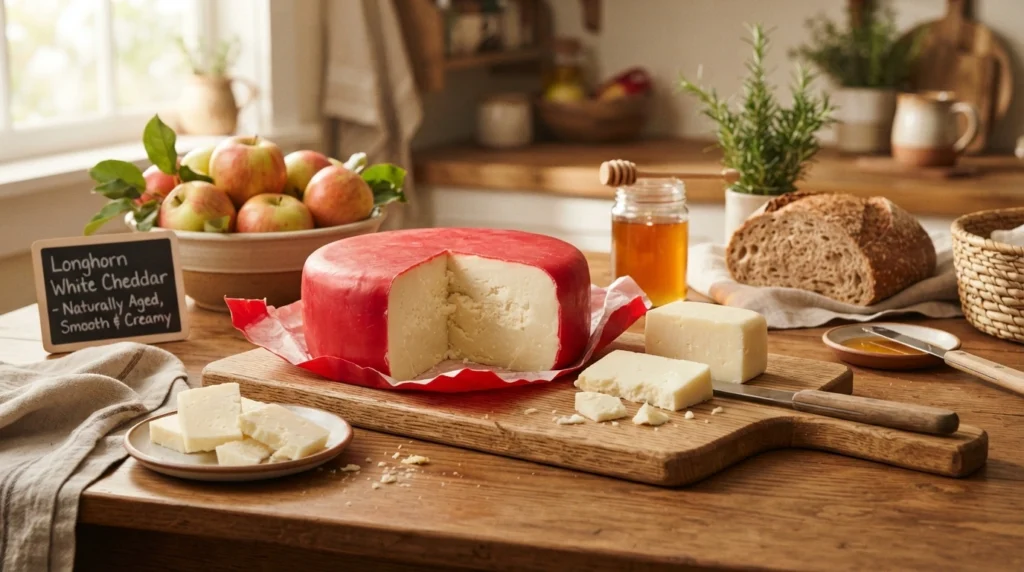
Longhorn white cheddar refers to a semi-hard cheese cut and packaged in a distinctive cylindrical shape, which, when sliced, produces the characteristic half-moon shape most people associate with the “Longhorn” name.
The term originally describes the shape and cutting style of the cheese rather than a specific flavor profile, which is why you’ll find Longhorn-style cheese labeled as Colby, cheddar, or even pepper jack depending on the producer.
The “white” designation simply means the cheese is left uncolored, without the addition of annatto, a natural plant-based coloring commonly used to give cheddar its familiar orange hue.
Nutritionally and flavor-wise, white and orange versions of the same cheese are essentially identical the color difference is purely cosmetic and doesn’t affect taste, texture, or how the cheese performs in cooking.
Where the Longhorn Name Comes From
The “Longhorn” name traces back to the traditional shape used for aging and selling this style of cheese, historically associated with Colby cheese production in Wisconsin.
Some smaller producers still shape and age their Longhorn cheddar the traditional way, wrapping it in cheesecloth and dipping it in wax before it goes to market, a method that dates back generations at some family-run cheese factories.
A handful of these regional producers, some operating continuously since the early-to-mid twentieth century, still describe their process as largely unchanged from when the factory first opened.
Which is part of the appeal for shoppers specifically seeking out a more traditional, small-batch version rather than a mass-produced supermarket block.
Longhorn White Cheddar vs. Regular Cheddar
Although both are frequently labeled “cheddar,” Longhorn-style cheese and traditional block cheddar aren’t always made using the exact same process, which leads to some real differences in texture and flavor.
Key Differences
- Texture: Longhorn-style cheese tends to be softer, springier, and more elastic than a traditional aged cheddar block, largely because much of what’s sold under the Longhorn name is actually a Colby or Colby-cheddar blend rather than pure cheddar
- Moisture content: Longhorn-style cheese generally has a higher moisture content, giving it a creamier mouthfeel compared to drier, more crumbly aged cheddars
- Flavor intensity: Because it’s typically aged for a shorter period, Longhorn white cheddar tends to taste milder and sweeter than a sharp or extra-sharp cheddar
- Meltability: The higher moisture content generally makes Longhorn-style cheese melt more smoothly, making it a strong choice for grilled cheese, burgers, and casseroles
- Shape and cut: True cheddar is traditionally sold in rectangular blocks, while Longhorn cheese is defined by its cylindrical shape and resulting half-moon slices
Longhorn White Cheddar vs. Colby Cheese
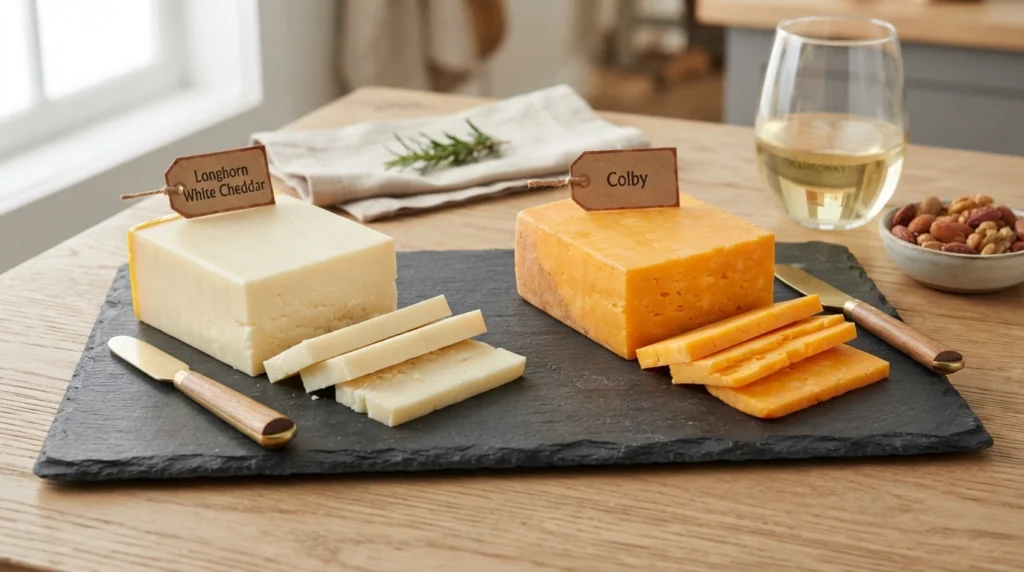
Because so much of what’s labeled “Longhorn” is technically a Colby or Colby-cheddar hybrid, it’s worth understanding how these two terms relate to each other.
Colby cheese was originally developed in Colby, Wisconsin, in 1885, using a process that skips the traditional cheddaring step and instead drains the whey more gradually while adding cold water to cool the curds.
This produces a softer, moister cheese than true cheddar. Because Colby has historically been sold in the same cylindrical shape now associated with the Longhorn name, “Longhorn” and “Colby” are frequently used interchangeably by both producers and shoppers, even though not every Longhorn-shaped cheese is strictly a Colby recipe.
This overlapping terminology is one of the more common points of confusion for shoppers, since a package labeled “Longhorn” might be pure Colby, a Colby-cheddar blend, or in some cases a straightforward mild cheddar simply cut and shaped in the traditional cylindrical style.
In practice, the differences between these variations are subtle enough that most home cooks won’t notice a meaningful gap in flavor or performance, but cheese enthusiasts who care about precise classification may want to check the ingredient label rather than relying on the “Longhorn” name alone to determine exactly what they’re buying.
Best Uses for Longhorn White Cheddar
Thanks to its mild flavor and smooth meltability, Longhorn white cheddar is a genuinely versatile cheese that works well across a wide range of dishes.
Where It Shines
- Grilled cheese and sandwiches its higher moisture content and mild flavor make it melt smoothly without overpowering other ingredients
- Burgers a classic melting cheese that pairs well with a wide range of toppings without competing with bolder flavors
- Cheese and charcuterie boards its mild, creamy character pairs particularly well with apples, pears, almonds, and lighter wines like Sauvignon Blanc or Riesling
- Casseroles and baked pasta dishes melts evenly and blends smoothly into cream-based or cheese-heavy recipes
- Snacking cubed or sliced on its own, it’s mild enough to appeal to picky eaters while still offering more character than plain American cheese
Nutrition Overview

Because Longhorn white cheddar is close in composition to Colby and mild cheddar, its basic nutrition profile follows a similar pattern to other semi-hard cow’s milk cheeses.
General Nutrition Notes
- Protein: A solid source of protein per serving, similar to most cheddar and Colby varieties
- Fat content: Generally moderate to high in fat, consistent with most semi-hard cheeses, though exact values vary by brand and specific recipe
- Sodium: Contains a meaningful amount of sodium from the cheesemaking and preservation process, so portion size matters for guests managing sodium intake
- Calcium: A good source of calcium, as with most dairy-based cheeses
- Lactose: Contains some lactose, though aged cheeses generally have lower lactose content than fresh dairy products, which some lactose-sensitive individuals tolerate reasonably well
Because Longhorn-style cheese isn’t a single standardized product, exact nutrition figures vary meaningfully by brand, so checking the specific package label is the most reliable way to get accurate numbers for a given product rather than assuming every Longhorn-labeled block matches a single generic value.
How to Choose and Store Longhorn White Cheddar
A few practical considerations can help you get the best experience out of this style of cheese, whether you’re buying it pre-sliced or as a full block.
- Buy from the deli counter for freshness if available, since freshly cut cheese generally has better texture than pre-packaged, longer-shelf-life versions
- Check the ingredient list if you’re specifically looking for a natural, minimally processed version, since some mass-produced versions include added stabilizers not found in traditional recipes
- Store wrapped tightly in wax paper or plastic wrap inside a resealable container to prevent the cheese from drying out or absorbing other refrigerator odors
- Bring to room temperature before serving on a cheese board, since cold cheese straight from the refrigerator tends to mute its flavor and creamy texture
- Use within the recommended window on the package, since higher-moisture cheeses like this one generally have a shorter shelf life than harder, more aged varieties
Frequently Asked Questions
Is Longhorn white cheddar the same as regular cheddar?
Not exactly. While often labeled cheddar, much of what’s sold as Longhorn-style cheese is actually closer to Colby or a Colby-cheddar blend, with a softer, more elastic texture and higher moisture content than traditional block cheddar.
What does “white” mean in Longhorn white cheddar?
“White” simply means the cheese hasn’t had annatto, a natural plant-based coloring, added during production. It doesn’t affect the flavor or texture only the color, which stays naturally pale rather than orange.
Does Longhorn white cheddar melt well?
Yes, its relatively high moisture content generally makes it melt smoothly, which is part of why it’s a popular choice for grilled cheese, burgers, and baked casseroles.
Is Longhorn cheese the same thing as Colby cheese?
They’re closely related and often used interchangeably, since much of what’s labeled “Longhorn” is shaped and produced similarly to traditional Colby cheese, though not every Longhorn-shaped product follows the exact same recipe.
How should I store Longhorn white cheddar?
Wrap it tightly in wax paper or plastic wrap and store it in the refrigerator in a resealable container to prevent it from drying out, and use it within the timeframe indicated on the packaging for the best texture and flavor.
Is Longhorn white cheddar a good snacking cheese?
Yes, its mild, sweet flavor and smooth texture make it approachable for snacking, especially for people who find sharper aged cheddars too intense.
Conclusion
Longhorn white cheddar earns its place in the cheese aisle by offering a genuinely versatile, approachable option mild enough for everyday snacking, meltable enough for grilled cheese and casseroles, and distinctive enough in shape to be instantly recognizable at the deli counter.
Whether you think of it as a style of Colby, a milder cousin of traditional cheddar, or simply a reliable all-purpose melting cheese, understanding what actually sets it apart makes it easier to know when to reach for it instead of a standard cheddar block.
For anyone who’s walked past that half-moon-shaped cheese without giving it a second thought, it’s worth a closer look next time you’re building a sandwich, a cheese board, or a family recipe a small, easy upgrade that costs nothing extra in effort but adds a noticeably creamier, milder character than a standard block of yellow cheddar would.
References
- Cheese.com. “Longhorn.”
- Wikipedia. “Cheddar Cheese.”
- Cheese Delicatessen. “White Longhorn Colby Cheddar Cheese.”
- Watonga Cheese Factory. “Our Famous Longhorn Cheddar.”
- USDA FoodData Central. “Cheese, Colby.”