An Easy Copycat Recipe You Can Make Tonight
Order a steak at LongHorn Steakhouse and there’s a good chance the plate arrives with a small side of seasoned rice pilaf tucked next to it simple, lightly savory, and dotted with just enough vegetables to keep it interesting without stealing attention from the main course.
It’s one of those side dishes that’s easy to overlook on the menu but surprisingly hard to stop eating once it’s in front of you.
This guide breaks down how to recreate LongHorn seasoned rice pilaf at home, including the ingredients, the technique that actually makes the biggest difference in flavor, common mistakes to avoid, and a few variations for guests who want to put their own spin on it.
“The answer is one technique most home cooks skip: toasting the dry rice in olive oil before the liquid ever goes in.”
What Makes LongHorn Seasoned Rice Pilaf Different From Regular Rice
At first glance, longhorn seasoned rice pilaf looks like it should be nearly identical to plain steamed rice, but the differences in technique add up to a noticeably different result.
Where boiled rice is simply cooked directly in water, pilaf-style rice is briefly sautéed in fat before any liquid is added, which toasts the outside of each grain and builds a subtle nutty flavor that carries through the finished longhorn seasoned rice pilaf.
Longhorn’s version also swaps water for chicken broth as the cooking liquid, adding a layer of savory depth that plain rice doesn’t have on its own.
Finely diced vegetables typically red bell pepper, onion, and sometimes carrot are folded in afterward, giving the dish a bit of color and texture without turning it into a heavier vegetable-forward side.
Ingredients for Homemade LongHorn Seasoned Rice Pilaf
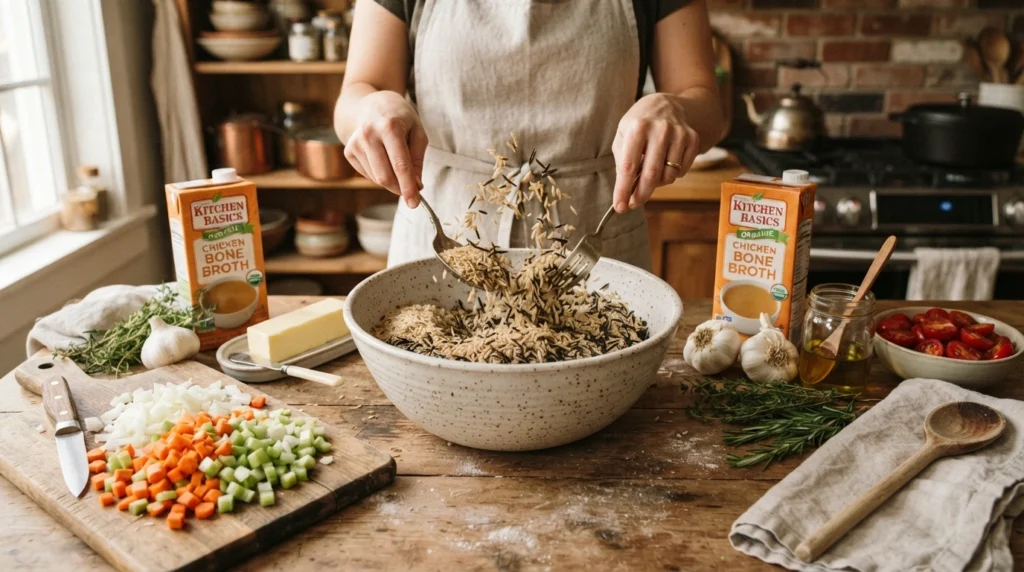
What You’ll Need
- 1½ cups long-grain white rice
- 2 cups chicken broth
- 2 tablespoons butter or olive oil
- ¼ cup finely diced red bell pepper
- 2 tablespoons finely diced onion
- 1 tablespoon fresh chopped parsley
- Salt and black pepper, to taste
Long-grain white longhorn seasoned rice pilaf is the closest match to what most copycat versions identify as the base used in the restaurant version, since its texture stays light and fluffy rather than sticky.
Chicken broth is the other non-negotiable ingredient swapping it for plain water noticeably flattens the final flavor, since the broth is doing a lot of the seasoning work here. longhorn seasoned rice pilaf
Ingredient Substitution Notes
- Butter vs. oil: Butter adds richness, while a neutral oil like avocado or olive oil works well for a dairy-free version without sacrificing much flavor
- Rice type: Long-grain white rice is the closest match, though brown rice can be substituted with additional cooking time
- Garlic: Fresh minced garlic or a pinch of garlic powder both work if you want a slightly more savory base
- Vegetables: Some copycat versions add finely diced carrot alongside the pepper and onion for extra color and a touch of natural sweetness
Step-by-Step: How to Make LongHorn Seasoned Rice Pilaf
- Rinse the rice. Rinse the dry rice under cold water until the water runs mostly clear, then drain well. This removes excess surface starch that can make the finished rice gummy.
- Toast the rice in fat. Melt the butter or heat the oil in a skillet over medium heat, then add the rinsed rice and stir to coat every grain. Continue stirring for two to three minutes until the rice turns a light golden color and smells lightly toasted.
- Add the aromatics. Add the diced onion and red bell pepper to the pan and sauté briefly alongside the rice, letting the vegetables soften slightly before the liquid goes in.
- Pour in the broth. Add the chicken broth and bring the mixture to a boil, then season with salt and pepper.
- Simmer, covered, over low heat. Reduce the heat to low, cover the pan, and let the rice simmer for 15 to 20 minutes, resisting the urge to lift the lid and stir during this time.
- Rest, then fluff. Once the liquid is absorbed, remove the pan from heat and let it sit, covered, for about five minutes before fluffing with a fork.
- Finish with parsley. Stir in the fresh chopped parsley just before serving for a pop of color and a light, fresh finish.
Tips for Getting the Best Texture and Flavor
A handful of small technique choices are what separate a flat, plain-tasting longhorn seasoned rice pilaf side from a genuinely great copycat version.
Key Techniques to Remember
- Don’t skip the toasting step, since sautéing the raw rice in fat before adding liquid is the single biggest flavor difference between pilaf-style rice and plain boiled rice
- Simmer, don’t boil, once the liquid is added a rolling boil tends to break down the grains and produce a mushier texture
- Resist lifting the lid while the rice simmers, since releasing steam partway through cooking can throw off the liquid-to-rice ratio and leave some grains undercooked
- Let the rice rest before fluffing, which allows any remaining steam to redistribute evenly and prevents a gummy, clumped texture
- Season gradually, tasting as you go, since chicken broth already carries some sodium and it’s easy to oversalt if you season heavily before tasting
Variations on LongHorn Seasoned Rice Pilaf

Once the base technique is solid, it’s easy to adjust the recipe to fit different meals or spice preferences.
Spicier Version
Adding a pinch of cayenne pepper or a small amount of chili powder to the seasoning gives the dish a subtle kick without overwhelming the mild base flavor, a variation several home cooks have specifically highlighted as a favorite twist on the original.
Herb-Forward Version
Swapping in dried basil, oregano, or rosemary alongside or instead of the parsley shifts the flavor profile toward something closer to an Italian-inspired side, which pairs particularly well with grilled chicken or fish.
Extra Garlicky Version
Adding fresh minced garlic during the sautéing step, alongside the onion and pepper, deepens the savory base and works especially well when the rice is served alongside a bolder protein like a fire-grilled steak.
Brown Rice Adaptation
For a slightly heartier, higher-fiber version, brown longhorn seasoned rice pilaf can replace white rice, though it requires additional liquid and a longer simmer time to reach the same tenderness.
Nutrition Considerations for Seasoned Rice Pilaf
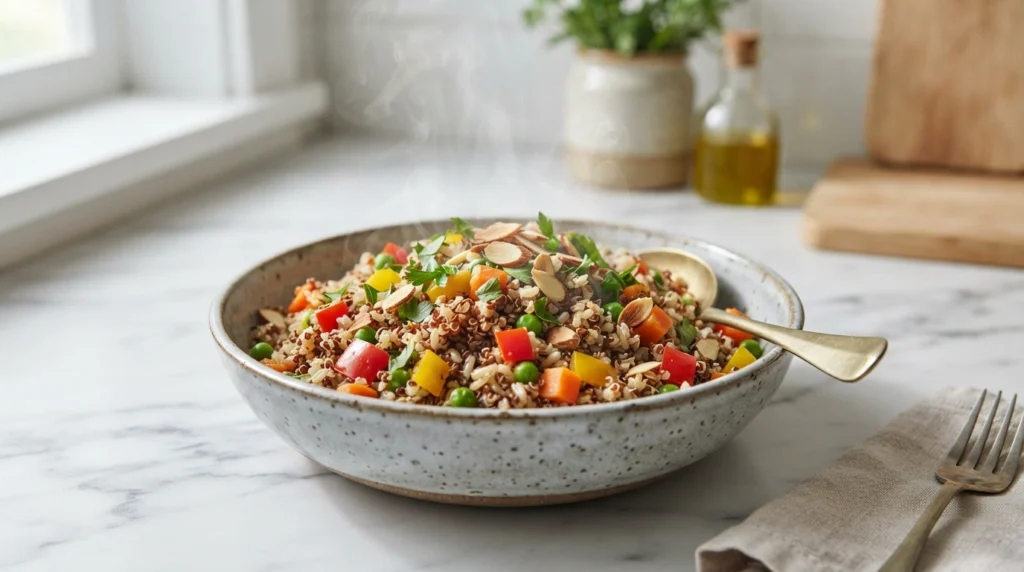
Compared to many steakhouse side dishes loaded with butter, cheese, or cream, seasoned rice pilaf is a relatively light option. The primary calorie sources are the rice itself and the fat used for toasting and sautéing, with the vegetables and broth adding minimal additional calories.
What to Keep in Mind
- Calories are largely driven by portion size and how much butter or oil is used during toasting
- Sodium comes mainly from the chicken broth and added salt, so using a low-sodium broth is an easy way to reduce overall sodium content
- Fiber can be increased by substituting brown rice for white rice, though this changes the texture and cooking time
- Gluten-free status depends on the broth used, since some pre-packaged broths contain gluten-based additives, so checking the label matters for guests with sensitivities
What to Serve With LongHorn Seasoned Rice Pilaf
This side dish is intentionally mild, which makes it a flexible pairing for a wide range of main courses rather than a dish designed to stand out on its own.
- Fire-grilled steak the classic steakhouse pairing that mirrors the original restaurant plate
- Grilled or pan-seared salmon the light, savory rice complements fish without overpowering it
- Roasted or grilled chicken a simple, well-balanced weeknight dinner combination
- Shrimp or other grilled seafood the rice works well as a light base rather than a heavy starch
- Roasted vegetables for a simple vegetarian meal, the pilaf can serve as a flavorful base for a rice bowl
Frequently Asked Questions
What type of rice is best for LongHorn seasoned rice pilaf?
Long-grain white longhorn seasoned rice pilaf is the closest match to what most copycat recipes identify as the restaurant’s base, since it produces a light, fluffy texture rather than a sticky one. Brown rice can be substituted with adjustments to liquid and cooking time.
Why do you toast the rice before adding the broth?
Toasting the raw longhorn seasoned rice pilaf in butter or oil coats each grain and lightly browns the exterior, which develops a subtle nutty flavor that plain boiled rice doesn’t have. This step is widely considered the key technique behind the dish’s distinct flavor.
Can I make LongHorn seasoned rice pilaf ahead of time?
Yes, rice pilaf can be made a day in advance and reheated gently with a small splash of broth or water to restore moisture, since rice tends to dry out slightly after refrigeration.
Is LongHorn seasoned rice pilaf gluten-free?
It can be, as long as the chicken broth used is confirmed gluten-free, since some pre-packaged broths contain gluten-based thickeners or flavorings. The rice and vegetables themselves are naturally gluten-free.
Can I use vegetable broth instead of chicken broth?
Yes, vegetable broth is a suitable substitute for a vegetarian version of the dish, though the flavor will be slightly lighter than the traditional chicken broth base.
Why is my rice pilaf mushy instead of fluffy?
Mushy rice pilaf is usually the result of using too much liquid, boiling rather than simmering, or lifting the lid during cooking, which disrupts the steam and liquid ratio needed for even cooking.
Conclusion
Recreating LongHorn seasoned longhorn seasoned rice pilaf at home comes down to one simple but often-overlooked technique: toasting the rice in butter or oil before the broth ever goes in.
Combined with a quick sauté of red bell pepper and onion, a gentle simmer, and a finishing touch of fresh parsley, this copycat version comes together in under 30 minutes and pairs well with almost any protein you’re serving alongside it.
Whether you keep it close to the original or branch into a spicier or herb-forward variation, this simple side dish is worth adding to a regular dinner rotation, especially on nights when you want something that feels a little more considered than plain rice without adding much extra time in the kitchen.
References
- Brooklyn Active Mama. “Longhorn Steakhouse Rice Pilaf Copycat Recipe.”
- Easy Homemade Life. “Longhorn Steakhouse Rice Pilaf Copycat Recipe.”
- The Food Hussy. “Longhorn Steakhouse Rice Pilaf.”
- Simply Side Dishes. “Longhorn Steakhouse Rice Pilaf Recipe.”
- LongHorn Steakhouse. “Full Menu.”
- USDA FoodData Central. “Rice, White, Long-Grain, Cooked.”