The Ultimate Guide to This Steakhouse Favorite
Few side dishes at a casual steakhouse generate as much buzz as Longhorn mac and cheese. What starts as a simple pasta side often ends up stealing the spotlight from the steak itself, thanks to its rich, four-cheese sauce, smoky bacon topping, and crunchy breadcrumb finish.
If you’ve ever wondered exactly what’s in this dish, how many calories it packs, how much it costs, or how it stacks up against similar sides at other steakhouse chains, this guide covers it all.
We’ll also walk through how to recreate this comfort-food classic at home, so even if you’re not headed to a restaurant tonight, you can still enjoy a version of this dish in your own kitchen.
What Is Longhorn Mac and Cheese?
Officially listed on the menu as the “Steakhouse Mac & Cheese,” this dish is positioned as more than a basic side. According to detailed menu breakdowns, it’s marked as a LongHorn Steakhouse Specialty, meaning it’s one of the most recommended pairings with the chain’s signature steaks and ribs.
That “specialty” label matters it signals that the restaurant considers this dish a genuine highlight of the menu rather than a filler side.
The Ingredients Behind Longhorn Mac and Cheese

The Pasta Base
Unlike standard elbow macaroni used in many homemade versions, Longhorn takes a slightly different approach to the noodle itself.
Menu detail resources confirm that the restaurant uses Cavatappi, a thick, corkscrew-shaped noodle whose shape is excellent for trapping the thick four-cheese sauce.
This pasta choice is a big part of why the dish feels heartier and more substantial than a typical boxed mac and cheese.
The Cheese Sauce
The cheese sauce is where Longhorn mac and cheese really sets itself apart from competitors. Ingredient breakdowns describe the sauce as a blend of four cheeses, typically including white cheddar, fontina, Monterey Jack, and Parmesan, combined with heavy cream, butter, and garlic.
This combination creates a sauce that’s both sharp and creamy, with enough depth of flavor to stand up to the smoky bacon topping.
The Toppings
No description of longhorn mac and cheese would be complete without mentioning what sits on top. The finished dish is typically topped with apple wood smoked bacon and buttery panko breadcrumbs, giving it a satisfying crunch that contrasts nicely with the creamy pasta underneath.
This textural contrast is frequently cited as one of the biggest reasons diners keep ordering it again.
Longhorn Mac and Cheese Price
Pricing for longhorn mac and cheese depends largely on how you order it as a side upgrade paired with an entrée, or as a larger, standalone a la carte portion.
According to recent pricing breakdowns, guests can expect to pay roughly $2.49 to $3.49 as a side upgrade replacing a standard side, or approximately $5.99 to $6.49 when ordered a la carte.
Other sources report the a la carte price landing specifically around $6.49, packed with 610 calories of creamy four-cheese sauce, smoky bacon, and Parmesan breadcrumbs.
Because pricing can vary by location and season, it’s always a good idea to confirm current pricing directly with your local restaurant before ordering, especially if you’re planning to order it as a shareable side for the table.
Calories and Nutrition Facts
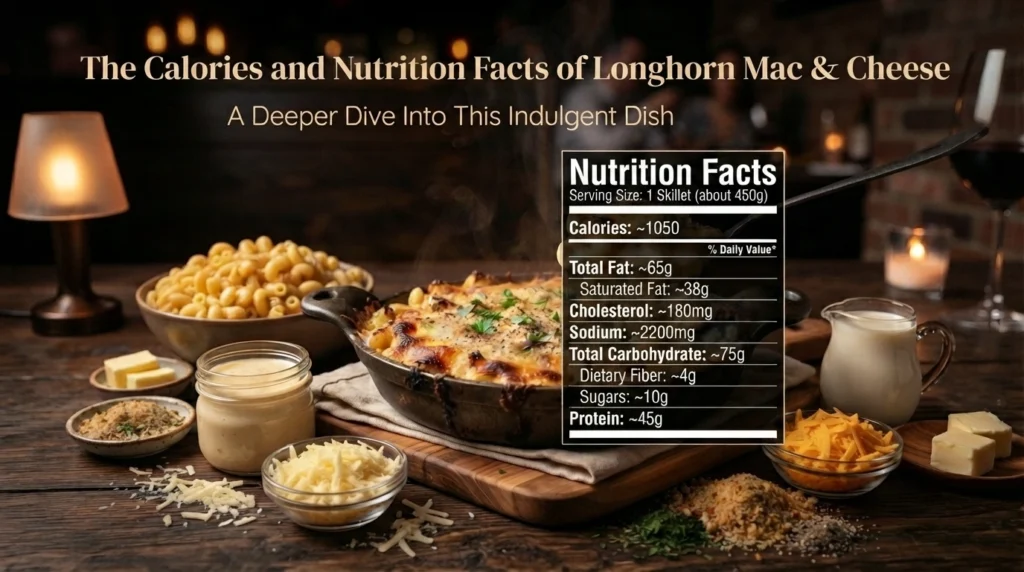
If you’re tracking calories or macros, it’s worth knowing exactly what you’re getting into with this dish. Nutrition databases consistently report that a single side portion of Longhorn mac and cheese contains 43g of total carbs, 37g of fat, 26g of protein, and 610 calories.
A separate nutrition source largely confirms this, listing the dish at 610 calories, with 37g of fat, 43g of carbs, and 26g of protein per serving.
To put that calorie count into perspective, one nutrition resource notes that you’d need to walk about 170 minutes to burn off 610 calories from a single serving.
That’s a helpful reminder that while this dish is undeniably delicious, it’s best treated as an occasional indulgence rather than an everyday side.
How It Compares to Other Steakhouse Mac and Cheese Options
Curious how longhorn mac and cheese stacks up against similar offerings at other chains? A side-by-side taste test comparing several major steakhouse brands found real differences in both flavor and nutrition.
That comparison reported that Texas Roadhouse’s version came in at 380 calories, 18g of fat, and 17g of protein per side, noticeably lighter than Longhorn’s richer, higher-calorie take on the dish.
This difference largely comes down to Longhorn’s four-cheese sauce and bacon topping, which add both flavor and calories compared to lighter competitor versions.
Allergen and Dietary Considerations
Before ordering, it’s worth understanding what longhorn mac and cheese does and doesn’t accommodate dietarily. Detailed allergen breakdowns note that the dish is not suitable for gluten-sensitive guests due to the pasta and breadcrumbs, and it’s not vegetarian-friendly by default because of the bacon.
The good news is that customization is possible for guests with specific dietary needs. Here are the most common modifications guests request:
- No bacon – Removing the bacon creates a more vegetarian-friendly version of the dish, though it’s still prepared in a kitchen that handles meat.
- No breadcrumbs – Guests who prefer a smoother texture without the crunchy topping can request this modification.
- Extra cheese – Some locations allow an additional scoop of the cheese blend for guests who want an even richer bite.
- Gluten awareness – Because the pasta and breadcrumbs both contain gluten, this dish is not appropriate for guests with celiac disease or gluten sensitivities.
Is Longhorn Mac and Cheese Kid-Friendly?
If you’re dining with children, you’ll be glad to know this dish isn’t spicy or overwhelming for younger palates.
According to menu detail resources, the Steakhouse Mac & Cheese is savory and creamy, does not contain jalapeños or spicy peppers, and is considered kid-friendly.
That said, because the portion size is generous, it’s often more than enough for a child’s meal on its own, or even split between two smaller appetites.
Ordering Longhorn Mac and Cheese for Takeout
If you’re not planning to dine in, you may be wondering whether this dish travels well. Fortunately, it’s available through the chain’s takeout service, and resources confirm it’s available for “Longhorn TO GO,” though the panko breadcrumbs may lose some crunch due to steam in the packaging.
If you’re ordering it to go, consider asking for the breadcrumb topping on the side if that option is available, so you can add it fresh once you get home.
How to Make a Copycat Version at Home
If a trip to the restaurant isn’t in the cards tonight, plenty of home cooks have worked out how to recreate this dish in their own kitchens. While the exact proprietary recipe remains a closely guarded secret, copycat versions generally follow a similar structure to the original.
Basic Steps for a Homemade Version
- Cook your pasta of choice according to package directions cavatappi works best if you can find it, though elbow macaroni is a common substitute.
- Make a roux by melting butter and whisking in flour until fragrant.
- Slowly stir in cream or half-and-half until the sauce thickens.
- Add a blend of shredded cheeses gradually, stirring until fully melted and smooth.
- Combine the sauce with the cooked pasta and transfer to a baking dish.
- Top with crumbled bacon and panko breadcrumbs.
- Bake until the breadcrumbs turn golden brown, then serve warm.
One popular copycat recipe emphasizes a key detail that makes a real difference in texture: it’s best to grate cheese fresh, since pre-shredded cheese won’t melt as properly into the sauce.
This small step can significantly improve how smooth and creamy your homemade version turns out.
Nutrition of Homemade Versions
Interestingly, homemade copycat versions of this dish often come in noticeably lighter than the restaurant original. One recipe reports a nutritional profile of roughly 345 calories per half-cup serving, with 22g of fat and 17g of protein.
This makes homemade versions a reasonable option for anyone who loves the flavor but wants more control over portion size and richness.
Tips for Enjoying Longhorn Mac and Cheese More Mindfully
Given its rich, indulgent nature, a few simple strategies can help you enjoy this dish without overdoing it on a given visit:
- Order it as a shared side rather than a full individual portion, especially if you’re already ordering a hearty steak entrée.
- Ask about lighter modifications, such as skipping the extra cheese or requesting the bacon on the side.
- Pair it with a lighter vegetable side, like broccoli or asparagus, to balance out the richness of the meal.
- Treat it as an occasional specialty item rather than a regular order, given its calorie and sodium content.
- Consider the a la carte portion for sharing, since it’s generous enough to split between two or more people at the table.
Frequently Asked Questions
How much does Longhorn mac and cheese cost?
Pricing typically ranges from about $2.49 to $3.49 as a side upgrade with an entrée, or roughly $5.99 to $6.49 when ordered as a standalone a la carte portion, though exact pricing can vary by location.
How many calories are in Longhorn mac and cheese?
A standard side portion contains approximately 610 calories, along with around 37g of fat, 43g of carbs, and 26g of protein.
What kind of pasta does Longhorn use for its mac and cheese?
The restaurant uses cavatappi, a thick, corkscrew-shaped pasta that’s well suited to holding the thick, four-cheese sauce.
Is Longhorn mac and cheese gluten-free?
No. Because the dish contains both pasta and panko breadcrumbs, it is not suitable for guests avoiding gluten.
Can I order Longhorn mac and cheese without bacon?
Yes. Most locations can prepare the dish without bacon upon request, making it a more vegetarian-friendly option, though it’s still worth confirming shared kitchen practices if you have dietary restrictions.
Does Longhorn mac and cheese travel well for takeout?
It’s available for takeout, though the panko breadcrumb topping may lose some of its crunch during transport due to steam buildup in the packaging.
Can I recreate Longhorn mac and cheese at home?
Yes. Several copycat recipes exist online that closely mimic the dish’s texture and flavor using a four-cheese sauce, cavatappi or elbow pasta, bacon, and a panko breadcrumb topping.
Conclusion
It’s easy to see why Longhorn mac and cheese has become such a standout item on the menu. Between its rich four-cheese sauce, hearty cavatappi pasta, smoky bacon, and crunchy panko topping, it delivers far more flavor and texture than a typical steakhouse side dish.
Whether you’re planning to order it at the restaurant, request a lighter modification, or attempt a copycat version in your own kitchen, understanding exactly . What goes into this dish and how it fits into a balanced meal makes it that much easier to enjoy responsibly on your next visit.
References
- Carb Manager – Carbs in Longhorn Steakhouse Sides Steakhouse Mac & Cheese
- CalorieKing – Calories in LongHorn Steakhouse Steakhouse Mac & Cheese
- I’m Hungry For That – Longhorn Steakhouse Mac and Cheese Recipe
- Eat This, Not That! – I Tried the Mac & Cheese at America’s Most Popular Steakhouses
- Longhorn Steakhouse Menu US – Steakhouse Mac & Cheese Price, Nutrition, Allergen
- CopyKat Recipes – Longhorn Steakhouse Mac and Cheese Copycat Recipe
- Ketogenic.com – Steakhouse Mac & Cheese Macros
- LongHorn Menu (LonghornMenu.onl) – Mac & Cheese Menu Prices, Calories & Nutrition 2026
- Eat This Much – Steakhouse Mac & Cheese Nutrition Facts