The Story Behind the Iconic Steerhead
Few restaurant emblems are as instantly recognizable as the LongHorn Steakhouse logo. That weathered steer’s head, framed by sweeping horns and rugged Western lettering, has greeted hungry guests since the early 1980s and still anchors the brand’s identity today.
Whether you have driven past a roadside sign or noticed the badge on a menu, this logo has quietly become one of the most memorable symbols in casual dining.
This article looks closely at the LongHorn Steakhouse logo its origin story, the meaning behind its design choices, the colors and typography that make it work, and how it compares to other steakhouse branding.
You will also find answers to common questions people ask about this iconic emblem, along with authentic references so you can explore the brand’s history further yourself.
The Origin of the LongHorn Steakhouse Logo
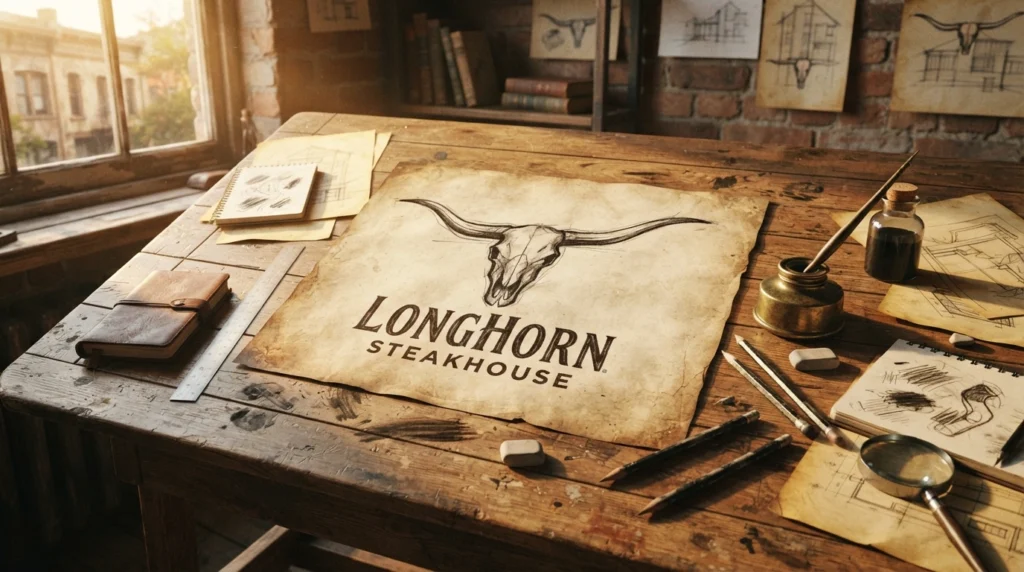
The story of the LongHorn Steakhouse logo begins with the restaurant itself. LongHorn Steakhouse opened its very first location on Peachtree Street in Atlanta, Georgia, on August 10, 1981, founded by George McKellar and a small group of partners who wanted to bring a rugged, Western-style steak experience to the Southeast.
According to the brand’s own historical timeline, the now-famous steerhead symbol arrived soon after those early days and quickly became attached to the restaurant’s growing footprint across the East, Midwest, and Southwest.
A pivotal moment in the brand’s early history came in 1982, when an unexpected snowstorm shut down interstate travel through Atlanta. Stranded travelers flooded into the original LongHorn location, and the restaurant’s reputation and its emerging visual identity began to spread from there.
By the time LongHorn joined the Darden Restaurants family in 2007, the steerhead badge was already a well-established piece of the brand’s identity, one that Darden chose to preserve rather than overhaul.
What the LongHorn Steakhouse Logo Symbolizes
At its core, the LongHorn Steakhouse logo is built around a single powerful image: the head of a longhorn steer, rendered as a bold outline rather than a highly detailed illustration.
This choice is deliberate. Longhorn cattle have long been associated with the American frontier and with the ranching traditions of Texas and the greater Southwest, making the animal a natural fit for a steakhouse built around hearty, fire-grilled beef.
The horns themselves are drawn with a slight upward flare, almost flame-like, which subtly reinforces the idea of open-fire cooking without needing any literal flame imagery.
Paired with the restaurant’s name in a rugged, hand-drawn-style typeface, the overall effect is a badge that feels less like a corporate mark and more like something you might find branded onto a leather saddle or stamped on a ranch gate.
Why a Steerhead Instead of a Full Animal
Restaurant branding experts often point out that simplified, symbolic marks tend to age better than literal, highly detailed illustrations. A full-bodied cattle illustration can look dated or overly busy at small sizes, especially on signage, menus, or mobile screens.
By isolating just the head and horns, the LongHorn Steakhouse logo remains legible and striking whether it is printed on a highway sign or scaled down to a social media icon.
Colors and Typography of the LongHorn Steakhouse Logo
Color and font choices do as much work as the imagery itself, and the LongHorn Steakhouse logo makes deliberate use of both.
The Color Palette
The badge relies on a warm combination of brown and burgundy tones. Brown evokes leather, wood, and the earthy tones of a ranch or ready-to-cook beef, while the deeper burgundy red suggests both red meat and red wine, two staples of a steakhouse dining experience.
Together, these colors create a feeling that is described by branding analysts as welcoming and inviting rather than aggressive, which suits a family-oriented, casual dining concept.
The Typography
The lettering in the LongHorn Steakhouse logo uses a bold, narrow-contoured serif style on the top line, paired with a slightly wider, extended treatment on the bottom line reading “Steakhouse.”
According to brand history sources, the closest commercial fonts to this custom lettering include styles similar to Quick Meal Regular or Black No. 7, though the actual letterforms have been hand-modified to feel more rugged and less mechanically uniform.
This handcrafted quality is part of what gives the badge its Western, roadhouse authenticity.
“The LongHorn Steakhouse badge… is composed of a graphical part and a two-leveled inscription, executed in a brown and burgundy color palette, which looks warm and welcoming,” notes 1000logos.net in its brand history breakdown.
How the LongHorn Steakhouse Logo Has Evolved
Unlike many restaurant chains that redesign their branding every few years, LongHorn has kept its core badge remarkably consistent since its 1981 debut.
Small refinements have been made over the decades sharper linework, cleaner reproduction for digital use, and adjustments to fit modern signage standards but the essential structure of the steerhead, the two-tier lettering, and the brown-and-burgundy palette has remained untouched.
This consistency is itself a branding strategy. A logo that stays recognizable across four decades builds a level of trust and familiarity that a frequently changing mark cannot match.
Guests who ate at LongHorn in the 1980s can still recognize the same badge on a restaurant today, which reinforces the brand’s positioning around heritage, tradition, and “steak done right.”
Where You Will See the LongHorn Steakhouse Logo
The badge appears across nearly every touchpoint of the brand, and its consistent placement helps reinforce recognition:
- Exterior signage large-format versions of the steerhead badge mark LongHorn locations along highways and in shopping centers.
- Menus and table materials a smaller version of the logo anchors printed menus, check presenters, and table tents.
- Staff uniforms the steerhead mark appears on aprons and shirts worn by servers and kitchen staff.
- Merchandise collectible items such as steak knives, glassware, keychains, and lapel pins often carry the logo, as noted by restaurant memorabilia archives.
- Digital platforms the logo serves as the brand’s icon across its website, mobile app, and social media profiles.
- Packaging to-go containers and gift cards feature the badge to maintain brand consistency beyond the dining room.
LongHorn Steakhouse Logo vs Other Steakhouse Branding
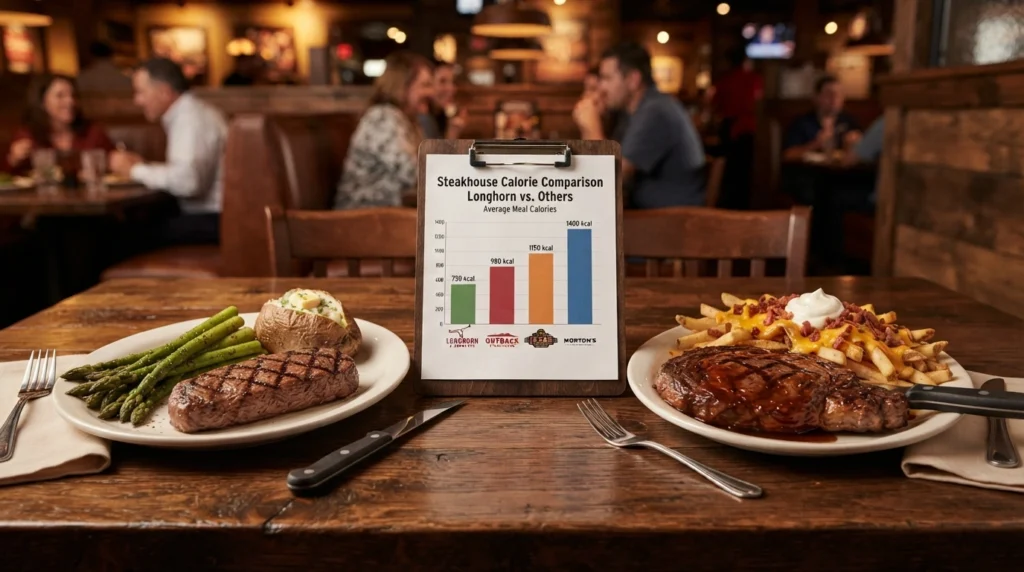
Compared to competitors in the casual steakhouse space, the LongHorn Steakhouse logo leans more heavily into Western and ranch symbolism than many of its rivals.
Some competing steakhouse brands favor sleek, modern wordmarks with little imagery at all, while others use more literal illustrations of cattle, cowboy hats, or state outlines.
LongHorn’s approach sits in the middle: symbolic enough to stay timeless, but detailed enough to clearly communicate the brand’s ranching heritage at a glance.
This balance is part of why design analysts frequently list the LongHorn Steakhouse logo among the more effective marks in the steakhouse category.
Trademark and Brand Protection
Like most well-known restaurant marks, the steerhead badge is a registered trademark, meaning it is legally protected against unauthorized commercial use, imitation, or reproduction.
This protection matters for two reasons. First, it prevents other businesses from creating confusingly similar branding that could mislead diners about who they are actually patronizing.
Second, it allows Darden Restaurants to maintain strict control over how the emblem appears across signage, packaging, digital platforms, and licensed merchandise, ensuring the badge always looks the way guests expect it to.
Anyone hoping to use the mark for commercial purposes, fan projects, or design portfolios should seek permission through official channels rather than lifting artwork directly from the brand’s website or app.
Why the Design Has Stood the Test of Time
Branding consultants often point to a handful of qualities that make an emblem durable, and the steer-head badge checks nearly all of them. It is simple enough to reproduce at a tiny scale, distinctive enough to avoid blending in with competitors, and emotionally resonant enough to tie directly into what the restaurant actually sells.
Few casual dining brands can claim a mark that has survived multiple ownership changes, a national expansion, and shifting design trends without a major overhaul.
That kind of staying power is rare, and it is one reason design writers continue to reference this particular badge when discussing effective restaurant branding.
Frequently Asked Questions About the LongHorn Steakhouse Logo
When was the LongHorn Steakhouse logo first created?
The original badge was designed in 1981, the same year the first LongHorn Steakhouse opened in Atlanta, Georgia, and the core steerhead design has remained largely unchanged since then.
What animal is featured in the LongHorn Steakhouse logo?
The logo features the head of a longhorn steer, shown as a simplified outline with prominent, upward-flaring horns rather than a fully detailed illustration.
What do the colors in the LongHorn Steakhouse logo represent?
The brown and burgundy color palette is meant to evoke leather, wood, red meat, and red wine, creating a warm and welcoming feeling associated with a steakhouse setting.
Has the LongHorn Steakhouse logo ever been redesigned?
The logo has received minor technical refinements over the years, but its overall structure, imagery, and color palette have stayed consistent since the brand’s founding in 1981.
Who owns LongHorn Steakhouse and its branding today?
LongHorn Steakhouse has been part of Darden Restaurants, Inc. since 2007, and the company has continued to use the original steerhead badge as the brand’s primary visual identity.
Where can I find official LongHorn Steakhouse logo files or brand assets?
Official brand assets are best sourced through licensed brand asset platforms or by contacting LongHorn Steakhouse and Darden Restaurants directly, since reproducing the trademarked logo without permission is restricted.
Conclusion
The LongHorn Steakhouse logo has done what most restaurant branding aims for but rarely achieves: it has stayed instantly recognizable for over four decades without losing its authenticity.
From its rugged steerhead imagery to its warm brown-and-burgundy palette and hand-drawn lettering, every element ties back to the brand’s Western roots and its promise of a hearty, fire-grilled steak experience.
That consistency, more than any single design trend, is what has turned a simple 1981 roadhouse badge into one of the most recognizable symbols in casual dining today.
References
- LongHorn Steakhouse — Official Company History and Timeline — m.longhornsteakhouse.com/about-us
- 1000logos.net — LongHorn Steakhouse Logo and Symbol, Meaning, History — 1000logos.net/longhorn-steakhouse-logo
- Logos-World.net — LongHorn Steakhouse Logo, Symbol, Meaning, History — logos-world.net/longhorn-steakhouse-logo
- Logopedia (Fandom) — LongHorn Steakhouse Brand Entry — logos.fandom.com/wiki/LongHorn_Steakhouse
- WorthPoint Dictionary — LongHorn Steakhouse Restaurant Chain: Guide to Value, Marks, History — worthpoint.com/dictionary/p/advertising/restaurants-chains/longhorn-steakhouse-restaurant-chain
- Brandfetch — LongHorn Steakhouse Brand Assets and Style Guide — brandfetch.com/longhornsteakhouse.com
- Darden Restaurants, Inc. — Corporate Brand Portfolio Overview — darden.com