
What is hand breaded chicken, and why does it show up on so many menus with a higher price tag? The label sounds appealing, but it often goes unexplained, so it’s hard to know what you’re actually getting. This guide clears up the meaning in plain terms, so you can order, shop, and cook with confidence.
What hand breaded chicken actually means
Hand breaded chicken is raw chicken that a cook coats by hand, one piece at a time, before cooking. If you are asking what is hand breaded chicken, think of a breading station: a tray of seasoned flour, a bowl of wet batter such as buttermilk or egg wash, and a tray of breading. The cook moves each piece through those steps with their hands, not on a machine line.
You will see the phrase on restaurant menus, usually beside hand breaded chicken tenders, sandwiches, and fried chicken. Chains and diners use it to signal that the coating was made in the kitchen, not in a factory.
The term describes how the coating is applied. It does not guarantee a particular flavor, recipe, or quality level.
How hand breaded chicken is made
Cooks bread chicken by hand in a simple three-step routine at a breading station: dry flour, wet dip, then the final coating. Each piece gets handled one at a time, which is how hand breaded fried chicken gets its craggy, uneven crust.
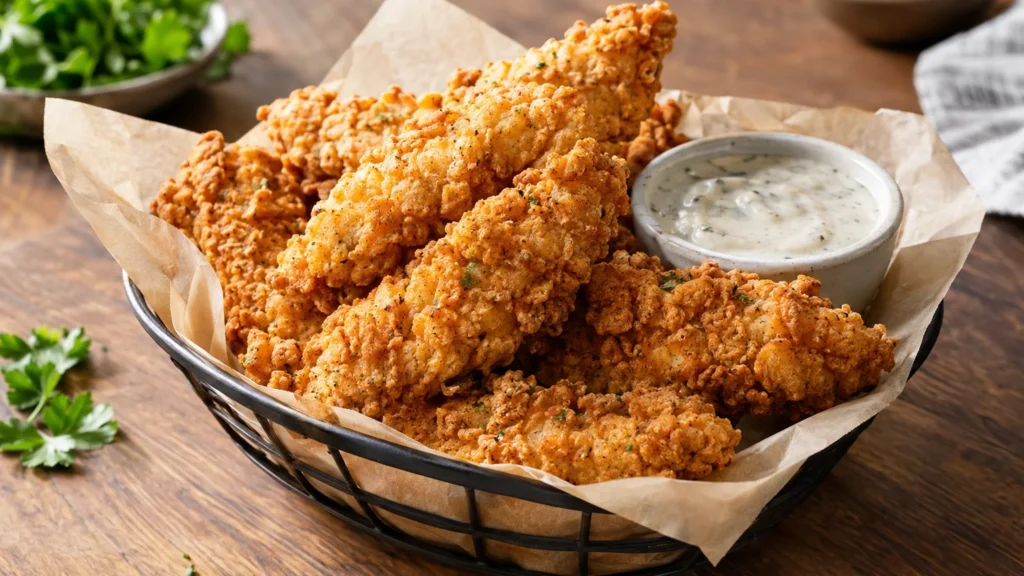
- Dredge in flour. Coat the chicken in seasoned flour and shake off the extra.
- Dip in the wet mix. Use buttermilk or an egg wash so the final coating sticks.
- Press in the breading. Pack on seasoned flour, crumbs or crackers firmly with your hand.
- Rest, then fry. Let the pieces sit a few minutes, then fry in hot oil until golden and cooked through.
Hand breaded vs machine breaded chicken
Hand breaded chicken is coated by a cook at a breading station. Machine breaded chicken is coated by equipment on a production line, and frozen pre-breaded chicken is usually machine coated, cooked or par-cooked, and frozen before it reaches you. The table shows how they compare.
| Factor | Hand breaded | Machine breaded | Frozen pre-breaded |
|---|---|---|---|
| Texture | Craggy, uneven, extra crunchy | Even and uniform | Often thinner and drier |
| Coating thickness | Varies piece to piece | Consistent | Consistent, usually light |
| Freshness | Usually breaded to order or the same day | Breaded in advance | Frozen for storage |
| Cost | Typically higher, due to labor | Typically lower | Typically lowest |
| Consistency | Depends on the cook | Very high | Very high |
Hand breading trades consistency for texture and freshness. Machines trade some character for speed and lower prices.
Why people love hand breaded chicken
It comes down to texture and taste. Hand breading gives chicken a craggy, crunchy crust that machines rarely match, and the meat underneath often tastes juicier and fresher.
- Craggy crunch: Pressing the coating on by hand creates ridges, nooks and flaky bits that turn extra crisp in the fryer.
- Juicier meat: A thick, well-set crust helps hold in moisture while the chicken cooks.
- Made-to-order freshness: Many kitchens bread it when you order, so it goes from the breading station to the fryer without a long wait.
- Real flavor: A buttermilk soak and seasoned flour add tang and depth you can taste in every bite.
Put simply, it feels homemade, even when a restaurant makes it.
Common ingredients and breading styles
Most hand breaded recipes start with the same pantry basics. Each coating changes the crunch in its own way.
- Seasoned flour: Gives a thin, classic crust. Salt, pepper, paprika and garlic powder add flavor.
- Buttermilk: Tenderizes the meat and helps the flour cling, which builds a craggy texture.
- Egg wash: Acts as glue for a thicker, sturdier shell that holds up to frying.
- Panko: Large, airy flakes fry up light and very crisp.
- Cornflake crumbs: Add a golden color and a deep, toasty crunch.
For a craggier coating, drizzle a spoonful of buttermilk into the flour and toss it. Those little clumps turn into crunchy bits. If you want a crisp-and-cheesy twist, the parmesan crusted chicken style shows how a different coating changes the bite.
How to tell if chicken is truly hand breaded
Look for uneven, craggy coating and ask how the kitchen makes it. A uniform shell is a sign of a factory process.
- Menu wording: Phrases like “breaded to order” or “made in-house” suggest a real breading station. “Hand breaded” alone can be a marketing claim.
- Appearance: Look for ragged edges, bare patches, and clumps of flour. Identical shapes and perfectly even color point to machine breading.
- Wait time: Breading to order often takes a little longer, though busy kitchens may prep ahead.
- Questions to ask: “Do you bread it in the kitchen?” and “Is it breaded fresh each day?”
- Package labels: Check the ingredient list and any “breaded” or “formed” wording. Claims vary by brand, so rely on the label, not the front-of-pack slogan.
Food safety tips for breading chicken at home
Raw chicken and a messy breading station can spread bacteria fast, so set up with care.
Use one hand wet, one hand dry. Pick up the chicken with your wet hand and drop it into the buttermilk or egg. Move it to the flour dredge with the same wet hand, then let your dry hand coat it and lift it out. This keeps your fingers from turning into clumpy breading paws and limits what you touch.
Prevent cross-contamination. Use a separate plate for raw and cooked chicken. Wash your hands with soap and warm water after breading. Clean the counter, cutting board, and tools before you touch anything else. Toss leftover egg or buttermilk wash and any flour that touched raw chicken.
Check the temperature. USDA guidance says chicken is safe at an internal temperature of 165°F. Insert a food thermometer into the thickest part, not touching bone.
Key Takeaways
- Hand breaded chicken is coated by a person, one piece at a time, using a breading station instead of a factory coating line.
- The usual steps are seasoned flour, a wet dip such as buttermilk or egg, then a final coating of flour or crumbs.
- Hand breading often gives a craggier, crunchier crust than machine breading, which tends to look more uniform.
- “Hand breaded” describes how the coating is applied. It does not tell you the chicken is healthier, fresher or fried a certain way.
- Check the menu wording, the texture and the shape of each piece, and ask staff if you want to be sure.
- At home, use separate hands or tools for wet and dry steps, and keep raw chicken away from other foods.
- Cook chicken to a safe internal temperature, as USDA guidance recommends, and check it with a food thermometer.
Frequently Asked Questions About what is hand breaded chicken
Is hand breaded chicken the same as fried chicken?
No. Hand breaded describes how the coating gets on the chicken. Fried chicken describes how it is cooked. Hand breaded chicken is often fried, so the two overlap, but you can also bake or air fry breaded chicken. Fried chicken can also be made without a breading, such as with a thin batter.
Is hand breaded chicken healthier than frozen breaded chicken?
Not automatically. Nutrition depends on the chicken cut, the coating, the oil and the portion size. Hand breading at home lets you control the ingredients and seasoning, which can help. Restaurant versions are usually fried, so check the nutrition information from the restaurant or the package label for specifics.
What is the difference between hand breaded and hand battered chicken?
Breading is a dry coating, such as seasoned flour or crumbs, that clings to a wet dip. Batter is a wet mixture of flour and liquid that coats the chicken in one dip. Breading usually cooks up craggy and crunchy. Batter tends to puff into a smoother, thicker shell.
Does hand breaded chicken take longer to prepare?
Yes, usually. Someone has to season, dip and coat each piece by hand, and the coating often benefits from a short rest before cooking. Machine lines do this at high speed. At home, a good rhythm with a three-bowl setup makes a batch go faster than you might expect.
Can you bake hand breaded chicken instead of frying it?
Yes. Bake it on a wire rack set over a sheet pan at a high oven temperature, and spray or drizzle the coating lightly with oil to help it brown. The crust will be crisp, though usually a little drier and less rich than deep-fried chicken. Check doneness with a thermometer.
Why is hand breaded chicken more expensive at restaurants?
Mostly labor and time. Staff must bread each order or batch by hand, and kitchens often use fresh, not frozen, chicken and make their own seasoned flour. Fryer oil, ingredient quality and local costs also affect the price. Prices vary by restaurant and location, so check the current menu.
What internal temperature should hand breaded chicken reach?
USDA guidance says chicken is safe when its internal temperature reaches 165°F. Insert a food thermometer into the thickest part of the piece, without touching bone. A golden crust alone does not prove the inside is cooked, so always check, especially with thick breasts or bone-in pieces.
How do you keep breading from falling off chicken?
Pat the chicken dry before the first flour coat. Press the final coating on firmly, then let the pieces rest on a rack for about 10 to 15 minutes so it sets. Keep one hand for wet steps and one for dry. Don’t crowd the pan, and avoid flipping the chicken too often.
References & Further Reading
- USDA Food Safety and Inspection Service – U.S. Department of Agriculture
- FoodSafety.gov – U.S. Department of Health and Human Services
- National Chicken Council – National Chicken Council
About This Article
This guide was written with AI assistance from publicly available information. Prices, nutrition values and availability can change, so confirm important details with the official source before you decide.